The 4 Types of B2B Intent Data (and the One Most Teams Miss)
Updated February 27, 2026
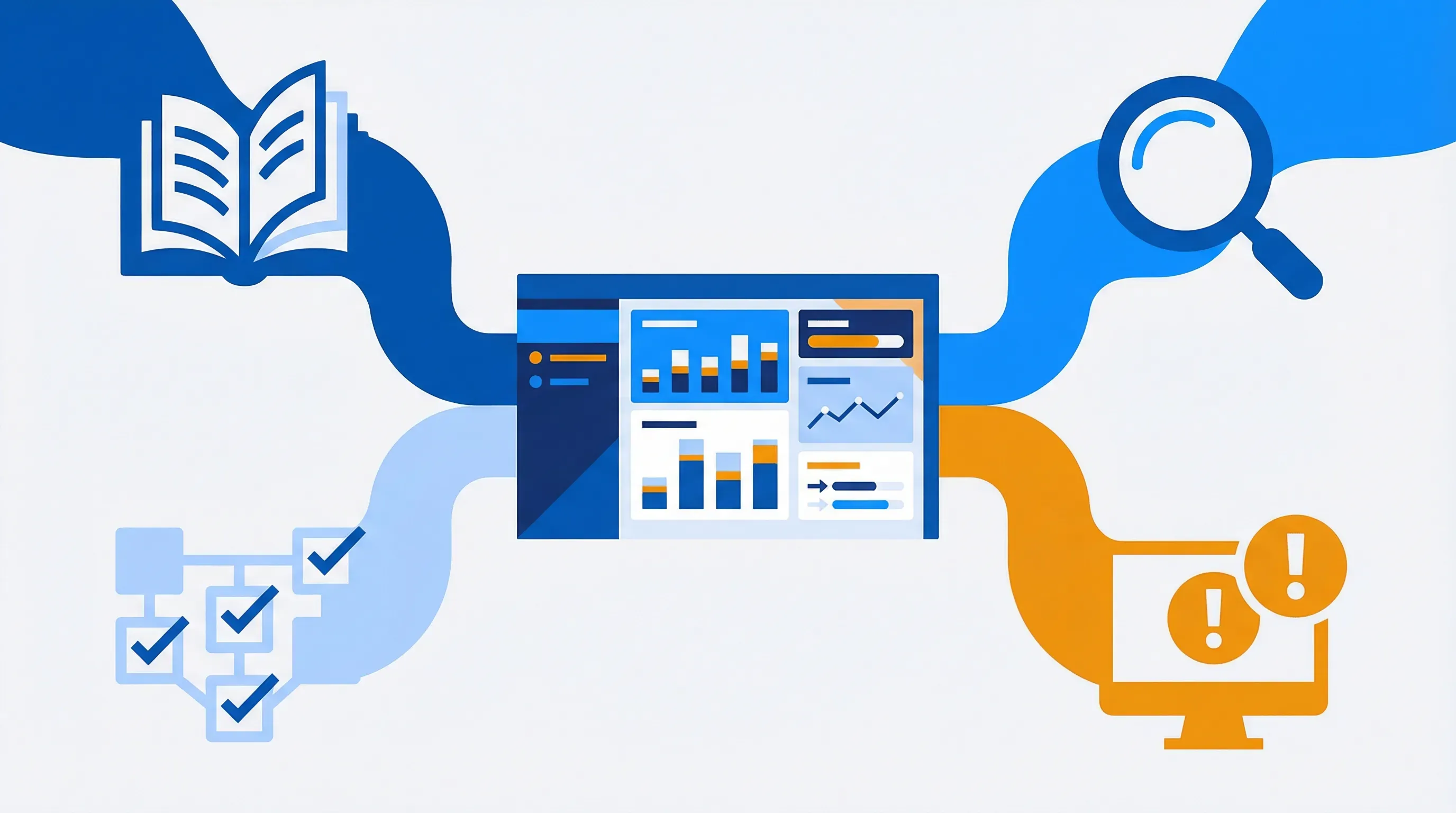
If your sales team uses Bombora or 6Sense, you already know what intent data can do. You can see which accounts are researching topics related to your product, prioritize outreach, and time your messages to hit when buyers are actively looking.
But most teams are only seeing part of the picture.
The standard industry taxonomy sorts intent data into first-party, second-party, and third-party. That framework tells you where the data comes from. It tells you nothing about what kind of signal you're actually getting. And when you look at intent data by signal source, a gap appears that nobody talks about.
There are four distinct types of B2B intent data. Most teams use one or two. The fourth type captures a stronger buying signal than the other three combined, and almost no one has it in their stack.
What Is Intent Data?
Intent data is information about a company's online behavior that indicates they may be in-market for a product or solution. In B2B sales and marketing, intent data helps teams identify which accounts to prioritize, when to reach out, and what to say.
The global intent data market is projected to exceed $4 billion by 2028. Providers like Bombora, 6Sense, G2, and ZoomInfo have built entire businesses around capturing and selling these signals.
The Traditional Taxonomy (and Why It Falls Short)
Most guides organize intent data into three buckets:
- First-party intent data: Signals from your own properties (website visits, content downloads, email engagement)
- Second-party intent data: Signals from a partner's properties (review sites, publisher networks)
- Third-party intent data: Signals aggregated from across the web (content consumption data, IP-based tracking)
This classification is useful for understanding data ownership and privacy implications. But it groups completely different behaviors into the same bucket. A website visit, a whitepaper download, and a pricing page view all count as "first-party intent data," even though they signal very different levels of buying readiness.
A more practical framework for sales and marketing teams: organize intent data by the type of signal it captures.
The 4 Types of Intent Data (by Signal Source)
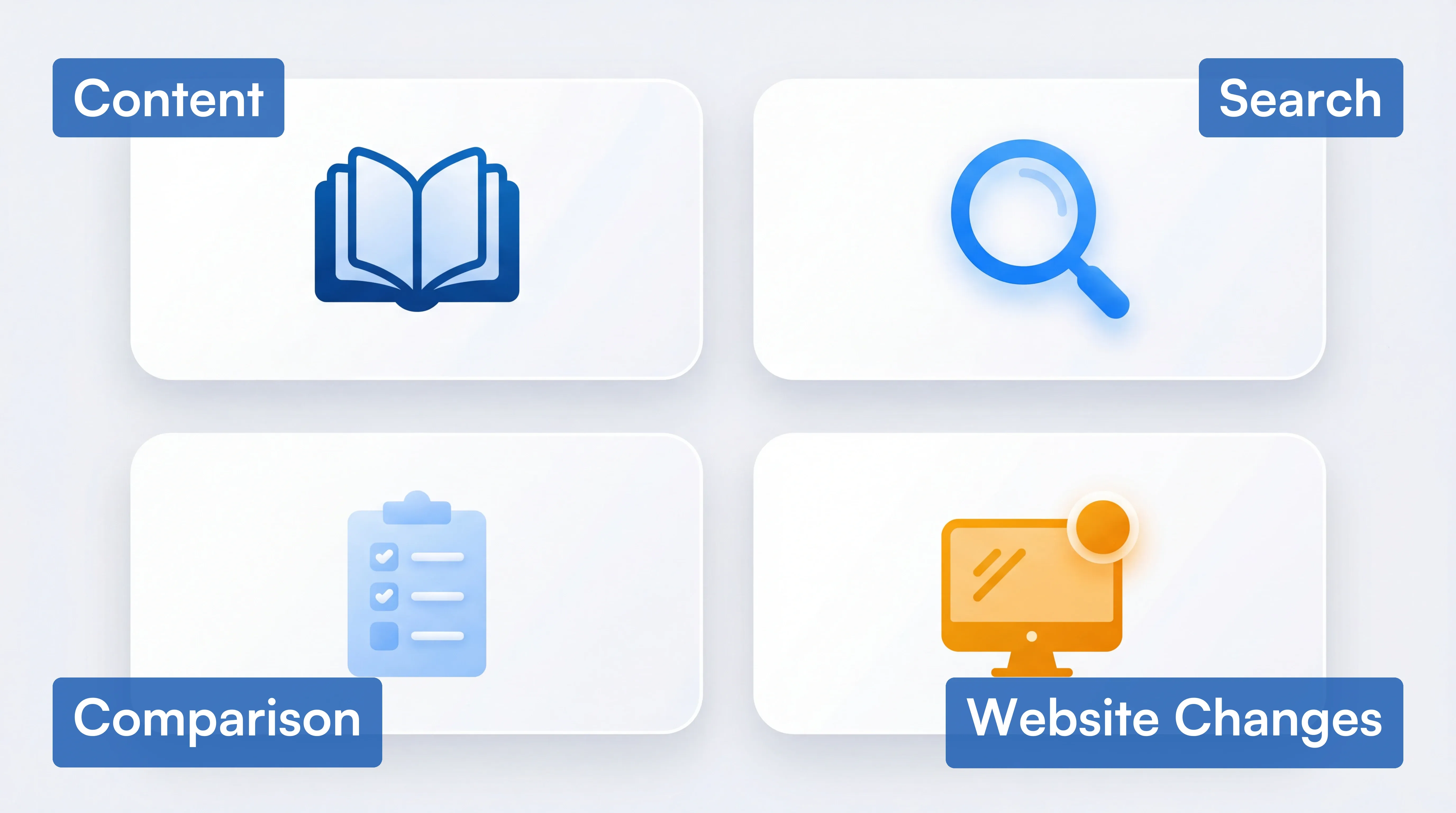
When you look at what behavior each intent data source actually captures, four distinct categories emerge. Each answers a different question about a prospect's buying journey.
| Signal Type | What It Captures | Key Question It Answers | Primary Providers |
|---|---|---|---|
| Content consumption | Topics a company researches | "What are they interested in?" | Bombora, TechTarget |
| Search behavior | Keywords a company searches for | "What solutions are they evaluating?" | 6Sense, Demandbase |
| Product comparison | Vendor research and reviews | "Who are they comparing?" | G2, TrustRadius, Gartner |
| Website changes | What a company does on its own site | "What are they actually doing?" | Visualping |
The first three types capture different forms of research behavior. The fourth captures action. That distinction matters.
Type 1: Content Consumption Intent Data
Content consumption intent data tracks what topics companies are researching across the web. When multiple employees at the same company read articles about "CRM migration" or "sales automation," that pattern gets flagged as a buying signal.
How it works
Providers like Bombora operate data cooperatives. Publishers in the co-op share anonymized content consumption data. Bombora's Company Surge algorithm identifies when a company's research activity on a specific topic exceeds their normal baseline, suggesting active interest.
What it tells you
Which companies are researching topics relevant to your product. If Acme Corp suddenly reads 3x more content about "website monitoring" than usual, that surge signal suggests they're exploring solutions in your category.
Limitations
Bombora's surge data typically updates weekly. By the time you see the signal, the prospect may have already talked to your competitor. The data is also topic-level, not solution-level: knowing someone researches "sales enablement" doesn't tell you whether they want a platform, a consultant, or a training program. And content consumption is inferential by nature. Reading an article doesn't mean someone is ready to buy. Analysts, students, and journalists also read B2B content.
Content consumption signals work best for building target account lists, ABM audience segmentation, and top-of-funnel prioritization. They're broad indicators that perform well at scale.
Type 2: Search Intent Data
Search intent data captures what companies are actively searching for on Google and other search engines. When accounts in your target market search for solution-specific keywords, that behavior signals evaluation-stage intent.
How it works
Providers like 6Sense and Demandbase use reverse-IP lookup, cookie data, and machine learning models to identify which companies are behind specific search queries. Their algorithms match anonymous search activity to company accounts.
What it tells you
Which companies are searching for keywords that suggest they're evaluating solutions like yours. If someone at a target account searches for "best competitive intelligence tools," they're further along in the buying process than someone reading a general article about competitive strategy.
Limitations
Search intent data is modeled, not observed. Providers infer which company is behind a search query using probabilistic matching. According to Pipeline360 research, match rates range from 40% to 85% depending on the provider and methodology. You also only get keyword-level granularity: you know someone searched for a term, but not what they did next. And cookie deprecation, VPN adoption, and tightening privacy regulations are making IP-based identification less reliable every year.
Search intent data is more specific than content consumption data and typically signals mid-to-bottom-of-funnel activity. It's strongest for identifying accounts in active evaluation.
Type 3: Product Comparison Intent Data
Product comparison intent data captures when companies actively research and compare specific vendors. This is the most explicit form of research-based intent.
How it works
Platforms like G2 and TrustRadius capture buyer behavior on their review sites. When someone at a target account views your product page, reads reviews, or compares you against competitors, that activity gets packaged as intent data.
What it tells you
Which specific companies are evaluating your product (or your competitors). G2's buyer intent data can tell you that Acme Corp compared your tool with two competitors in the last week. That's about as close to a "hand raise" as third-party intent data gets.
Limitations
G2 only sees behavior on G2. TrustRadius only sees behavior on TrustRadius. If a buyer evaluates vendors through other channels (direct website visits, analyst briefings, peer recommendations), comparison data misses it entirely. Enterprise buyers often rely on analyst reports and internal evaluations instead of review sites, which skews the signal. And the signal volume is lower than content consumption or search data, since not every account visits G2 during their evaluation.
Comparison intent data is strongest for bottom-of-funnel prioritization. When you see comparison intent, the account is actively evaluating. That's the right time for direct, personalized outreach.

Type 4: Website Change Intent Data
This is where the gap in most intent data stacks shows up.
The first three types all track research behavior: what a company reads, searches for, or compares. Research signals are valuable. But they share a limitation: they tell you what people are thinking about. They can't tell you what companies are doing.
Website change intent data captures actions. When a company updates its pricing page, expands its careers section, launches a new product, or changes its leadership team, those are behavioral signals that indicate real business activity.
How it works
Visualping monitors public web pages for visual and structural changes. You point it at specific pages on a prospect's or competitor's website, set a monitoring frequency, and receive alerts when something changes. Unlike text-only monitoring (like Google Alerts), Visualping detects visual changes: layout redesigns, new sections, removed content, and UI updates that text parsers miss entirely.
What it tells you
What companies are doing on their own websites. Each type of website change maps to a specific intent signal:
| Website Change | What It Signals | Why It Matters |
|---|---|---|
| Pricing page update | Pricing review or restructuring underway | Company is re-evaluating costs, potentially vulnerable to competitive alternatives |
| Careers page expansion | Budget unlocked, team growing | New headcount means new tools needed, fresh decision-makers joining |
| New product or feature page | Expanding into a new market or vertical | May need supporting tools, partnerships, or infrastructure |
| Leadership page change | New executives or restructuring | New leaders trigger vendor re-evaluations and fresh budget cycles |
| Tech stack or integrations page | Evaluating or switching vendors | Actively in a buying window for new solutions |
| About page or brand refresh | Strategic pivot, rebrand, or M&A activity | Company direction is shifting, creating new needs |
Why this is different from the other three types
Content consumption, search behavior, and product comparison all measure interest. Website changes measure action. A pricing page update is a stronger buying signal than a keyword search about pricing tools because the company has already moved from thinking to doing.
Consider two scenarios:
-
Bombora surge data shows that Acme Corp is researching "CRM migration" at 3x their normal rate. This suggests interest. It could mean one analyst wrote a report, three employees read the same trending article, or the company is genuinely evaluating a switch.
-
Visualping alert shows that Acme Corp just removed their Salesforce integration from their tech stack page and added a "Coming soon: new CRM" banner. This isn't inferred interest. This is confirmed action. The migration is already happening.
Both signals have value. But the second one tells you exactly what's happening and when to act.
Limitations
You need to specify which URLs to watch. Content consumption and search data work passively across your entire target market. Website change data requires selecting specific pages on specific accounts. Signal interpretation also requires context: a pricing page change could mean a price increase, a price decrease, a restructuring, or a cosmetic update. The change is clear; the implication sometimes requires human judgment. And companies don't change their websites every day. Website change signals are less frequent than the other three types, but each signal carries more weight.
Website change data works best for account-based selling, competitive intelligence, and trigger-based outbound. If you have a defined target account list and want to know the moment something meaningful happens, this is the signal type to add.
How the 4 Types Work Together

No single intent data type gives you the full picture. Each captures a different moment in the buying journey:
Content consumption tells you who's becoming aware of a problem. Useful for building target account lists and starting long-term nurture programs.
Search behavior tells you who's actively looking for solutions. Useful for timing outreach to accounts that are mid-evaluation.
Product comparison tells you who's comparing specific vendors. Useful for competitive positioning and late-stage deal acceleration.
Website changes tell you who's already taking action. Useful for trigger-based outreach, competitive takeaways, and identifying accounts in active transition.
Building a Complete Intent Data Stack
A practical intent data stack combines two or more signal types and feeds them into your existing GTM tools. Here's what a modern setup looks like:
| Layer | Tool | Signal Type | Feeds Into |
|---|---|---|---|
| Content consumption | Bombora or TechTarget | Topic surge data | HubSpot (lead scoring), ABM platforms |
| Search behavior | 6Sense or Demandbase | Keyword intent | CRM (account scoring), ad platforms |
| Product comparison | G2 or TrustRadius | Vendor research | Sales sequences, competitive alerts |
| Website changes | Visualping | Behavioral action signals | Clay (enrichment), HubSpot (workflows), Slack (alerts) |
The first three types are typically sold as annual platform subscriptions ($25K-$100K+/year for enterprise plans). Website change intent data through Visualping starts at a fraction of that cost, making it accessible to teams that can't justify enterprise intent data pricing.
Connecting Intent Data to Your Workflow
The value of intent data depends entirely on what happens after you receive a signal. Here's how RevOps teams connect website change signals to their existing stacks:
Visualping + Clay: Visualping detects a change on a target account's website. The alert triggers a Clay workflow that enriches the account with contact data, company information, and context about the change. Clay generates a personalized email draft and queues it for the SDR.
Visualping + HubSpot: A webhook from Visualping creates a HubSpot task or triggers a workflow. The CRM records the change as a timeline event on the company record, so the account owner sees it immediately and can follow up with context.
Visualping + Slack: For competitive intelligence, changes detected on competitor websites get posted to a dedicated Slack channel. The team reviews pricing updates, product launches, and messaging changes in real time.
What to Look For in an Intent Data Provider
When evaluating providers across any of the four signal types, five factors separate useful intent data from noise:
Signal freshness. How quickly does the provider deliver signals after the behavior occurs? Bombora's surge data updates weekly. Visualping alerts can fire within minutes of a change. For trigger-based outreach, speed matters.
Signal specificity. Does the data tell you what happened, or just that something happened? "Acme Corp is surging on CRM topics" is less actionable than "Acme Corp changed their CRM integrations page to remove Salesforce."
Integration support. Can the data flow into your existing tools? Look for native integrations with your CRM (HubSpot, Salesforce), orchestration layer (Clay), and communication tools (Slack, email). API access and webhook support are table stakes for modern intent data.
Coverage and scale. Content consumption and search data provide broad market coverage. Comparison and website change data offer deeper signals on fewer accounts. Know which trade-off fits your go-to-market motion.
Privacy and compliance. Especially relevant for search and content consumption data that rely on tracking technologies. Ensure your provider's data collection methods align with GDPR, CCPA, and your company's privacy standards. Website change data has an inherent advantage here: it monitors publicly available web pages, requiring no cookies, pixels, or tracking consent.
Intent Data FAQ
What is intent data?
Intent data is information about a company's online behavior that indicates they may be interested in purchasing a product or service. It helps B2B sales and marketing teams identify which accounts to prioritize and when to reach out. The four main signal types are content consumption, search behavior, product comparison, and website changes.
How is intent data collected?
Collection methods vary by signal type. Content consumption data comes from publisher cooperatives (Bombora's Data Co-op). Search intent data uses reverse-IP lookup and machine learning models. Product comparison data comes from review platforms like G2. Website change data uses automated monitoring tools that scan public web pages for visual and structural changes.
What are the different types of intent data?
The traditional taxonomy categorizes intent data as first-party (from your own properties), second-party (from partner properties), and third-party (aggregated from across the web). A more practical framework organizes intent data by signal source: content consumption, search behavior, product comparison, and website changes. Each type captures a different buyer behavior and answers different questions about purchase readiness.
Who are the main intent data providers?
Key providers by signal type include: Bombora and TechTarget (content consumption), 6Sense and Demandbase (search behavior), G2 and TrustRadius (product comparison), and Visualping (website changes). Many CRM and sales intelligence platforms like ZoomInfo and HubSpot also integrate intent data from multiple sources.
Is intent data worth the investment?
Intent data's ROI depends on how you activate it. According to Demand Gen Report, B2B marketers using intent data see an average 2.5x improvement in engagement rates. The key is matching the right signal type to your use case: broad content consumption signals for ABM targeting, specific comparison signals for competitive plays, and website change signals for trigger-based outbound.

Start Building Your Intent Data Stack
Most B2B teams have one, maybe two, types of intent data in their stack. They know what accounts are researching and sometimes what they're searching for. That's valuable, but it's incomplete.
Website change intent data fills the gap between what companies think about and what they do. When a target account updates their pricing, expands their team, launches a new product, or swaps out a vendor, those changes tell you more about buying readiness than any keyword surge or content download.
Teams that cover all four signal types will see opportunities that everyone else misses. The data is already out there, on public web pages, changing every day. The question is whether you're watching.
Visualping adds the fourth signal type to your intent data stack. Start monitoring your first target accounts for free and see what website changes reveal about your prospects.
Want to monitor web changes that impact your business?
Sign up with Visualping to get alerted of important updates from anywhere online.
Eric Do Couto
Eric Do Couto is the Head of Marketing at Visualping. He leads content strategy, growth operations, and brand positioning for website change detection.
More articles by Eric Do Couto