How to Monitor Pages Behind Forms and Logins with Actions
By Emily Fenton
Updated August 6, 2026
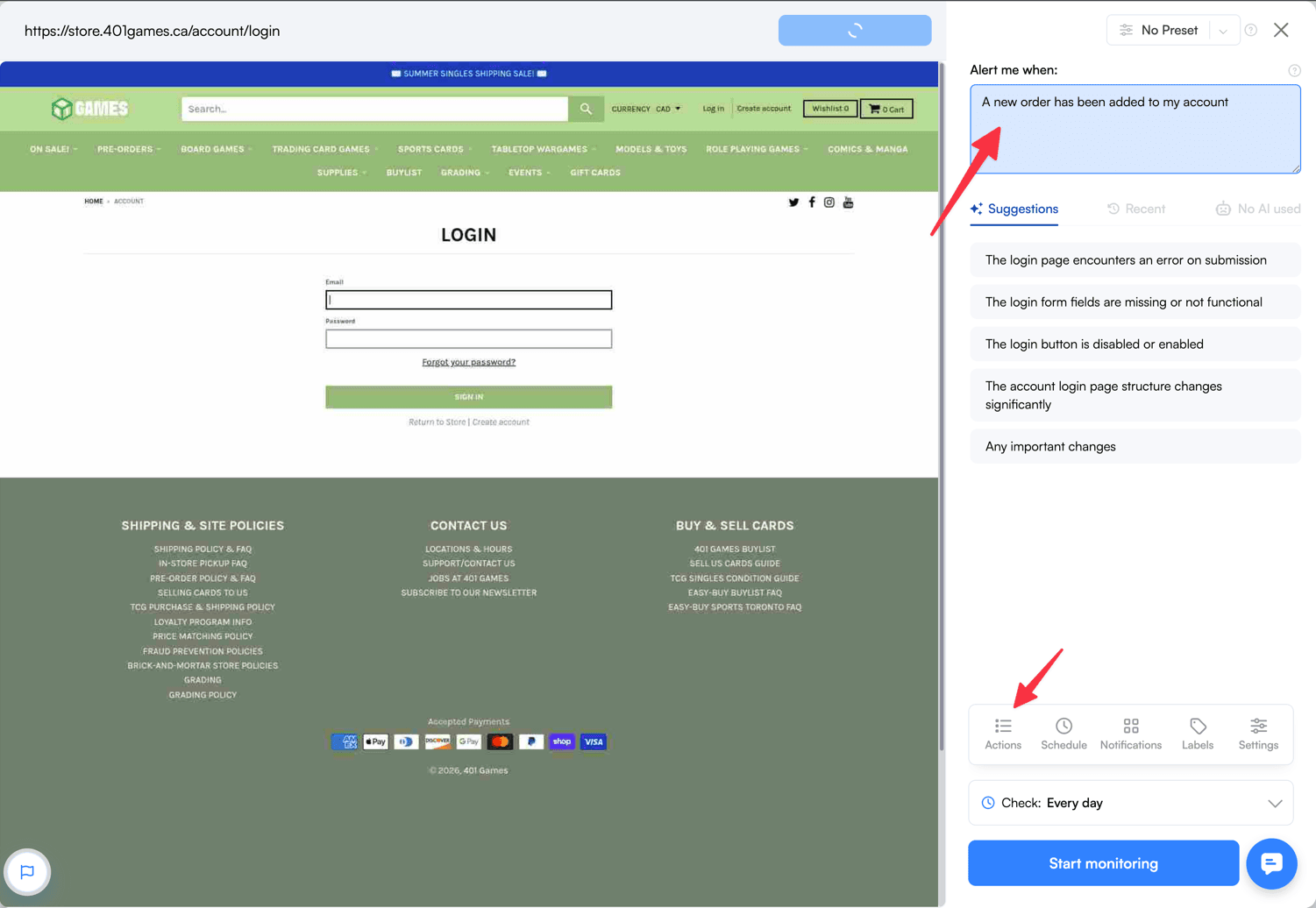
Plenty of pages hold what you want one step out of reach. A price that appears after you pick a size. A stock list that loads after you enter a postal code. An order history that exists only after you sign in. Paste a URL like that into any monitoring tool and it watches the wrong thing: the form, not the answer.
Actions fix that. They are the steps Visualping performs on a page before it takes each snapshot, so every check starts from the state you actually care about. Type into a field, click a button, wait for a slow script, dismiss a cookie banner, then capture. The steps run again on every check, so a monitor that needs a login keeps working long after you set it up.
Actions are on every plan, including the free one.
What Actions can do
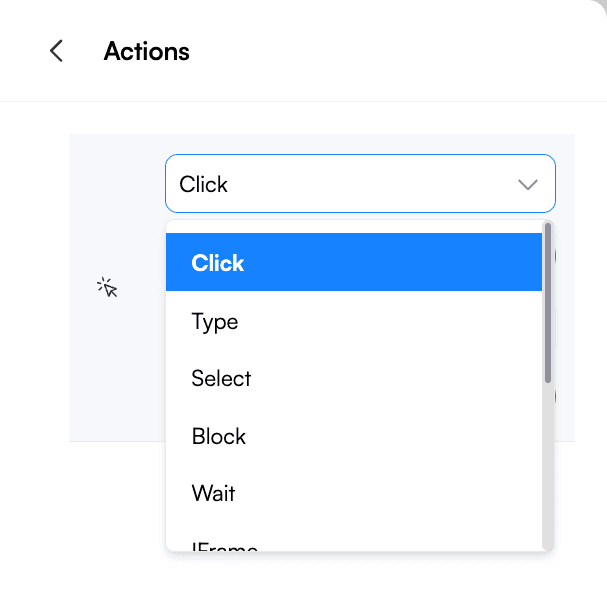
Eleven action types cover almost everything a page can ask of you before it shows its content.
Click presses a button or link. Type enters text in a field. Select picks from a dropdown. Wait pauses for a set number of seconds while a slow page finishes loading. Scroll moves down the page so lazy-loaded content appears. Go to navigates to another URL mid-sequence. Block hides an element, which is the cleanest way to kill a cookie banner or a rotating promo that would otherwise trigger false alerts. Refresh reloads. IFrame and Cookie reach content that sits inside an embedded frame or behind a session cookie. Script runs your own JavaScript for the awkward cases.
Actions run in order, top to bottom, and you can drag them to reorder.
Worked example: monitoring an account page behind a login
Here is the whole thing end to end on a real store. The goal: get an alert when a new order shows up in an account that only exists behind a sign-in form.
Step 1. Paste the URL and click Go. Use the address of the page you want to end up on. Visualping loads it and takes a first snapshot.
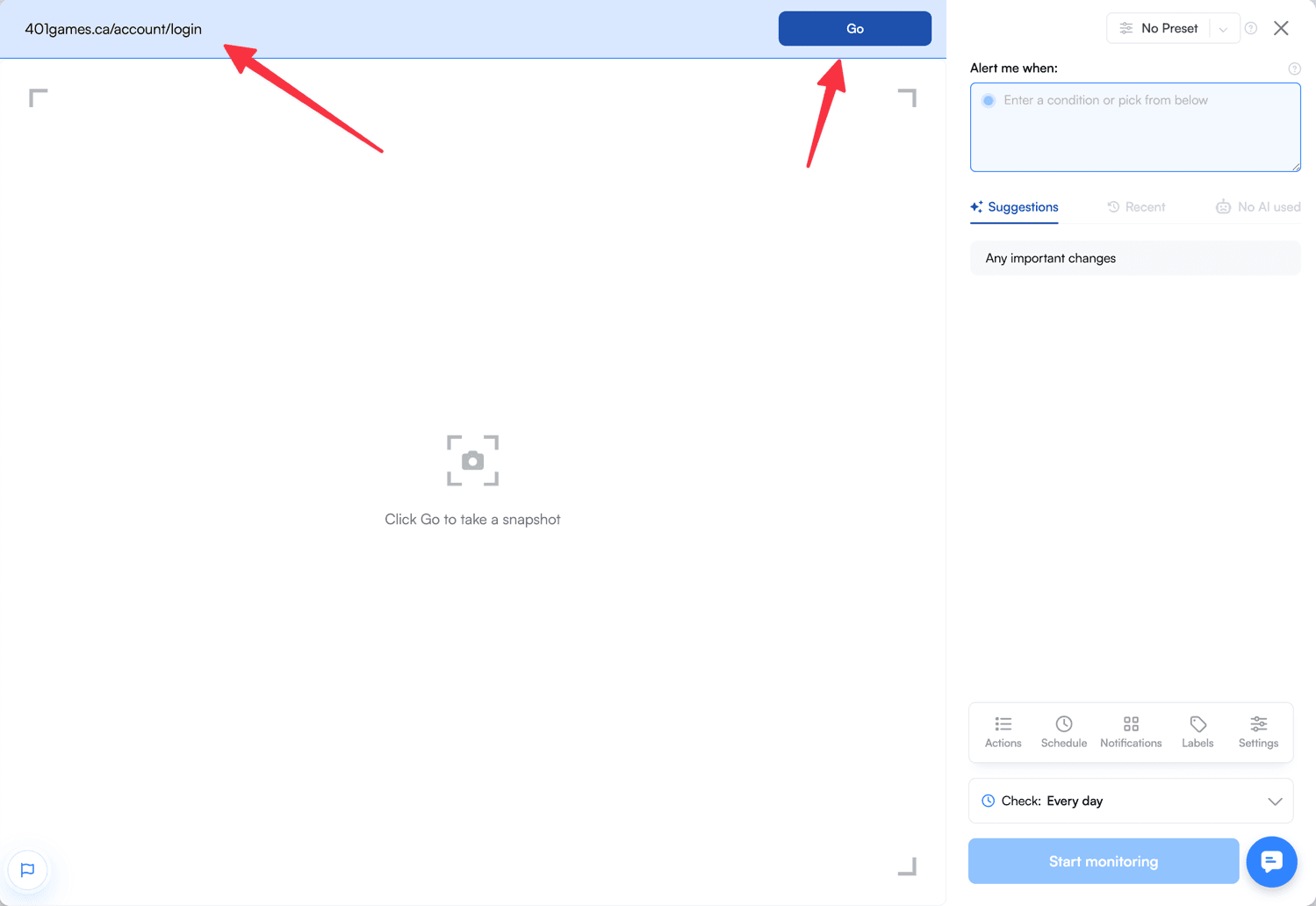
Step 2. Say what counts as a change, then open Actions. The "Alert me when" box takes plain language, so write the thing you actually care about: A new order has been added to my account. Visualping suggests conditions based on the page if you would rather pick one. This is the instruction the AI uses later to decide whether a change matters, so it is worth a sentence of thought. Then click Actions in the toolbar.
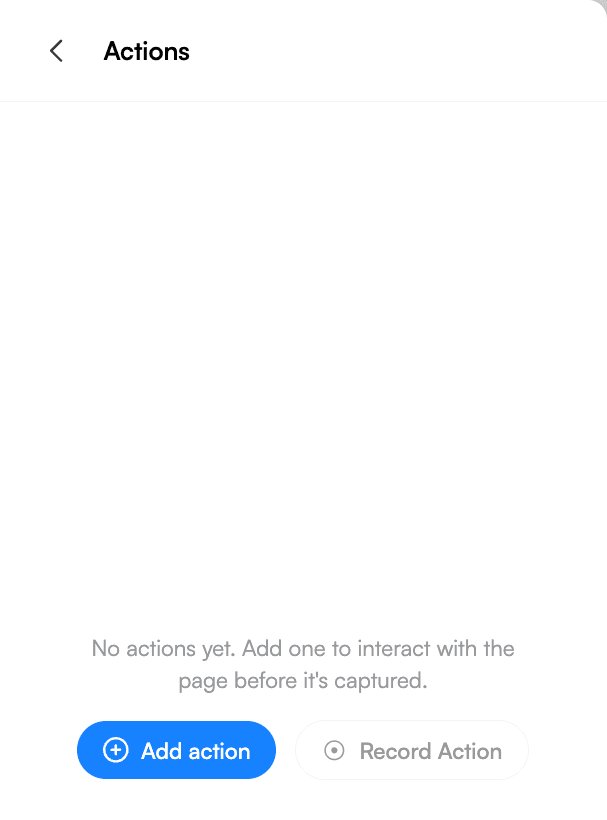
Step 3. Add your first action. An empty panel offers two paths: build the steps yourself with Add action, or record them in your browser with Record Action. We will build them here, and cover recording below.
Step 4. Type the username, then the password. Add a Type action, point it at the email field, and enter the address. Add a second Type action for the password field. The hide option, the eye icon beside the value, replaces the characters with dots so the password is not readable by anyone else looking at the monitor's settings.
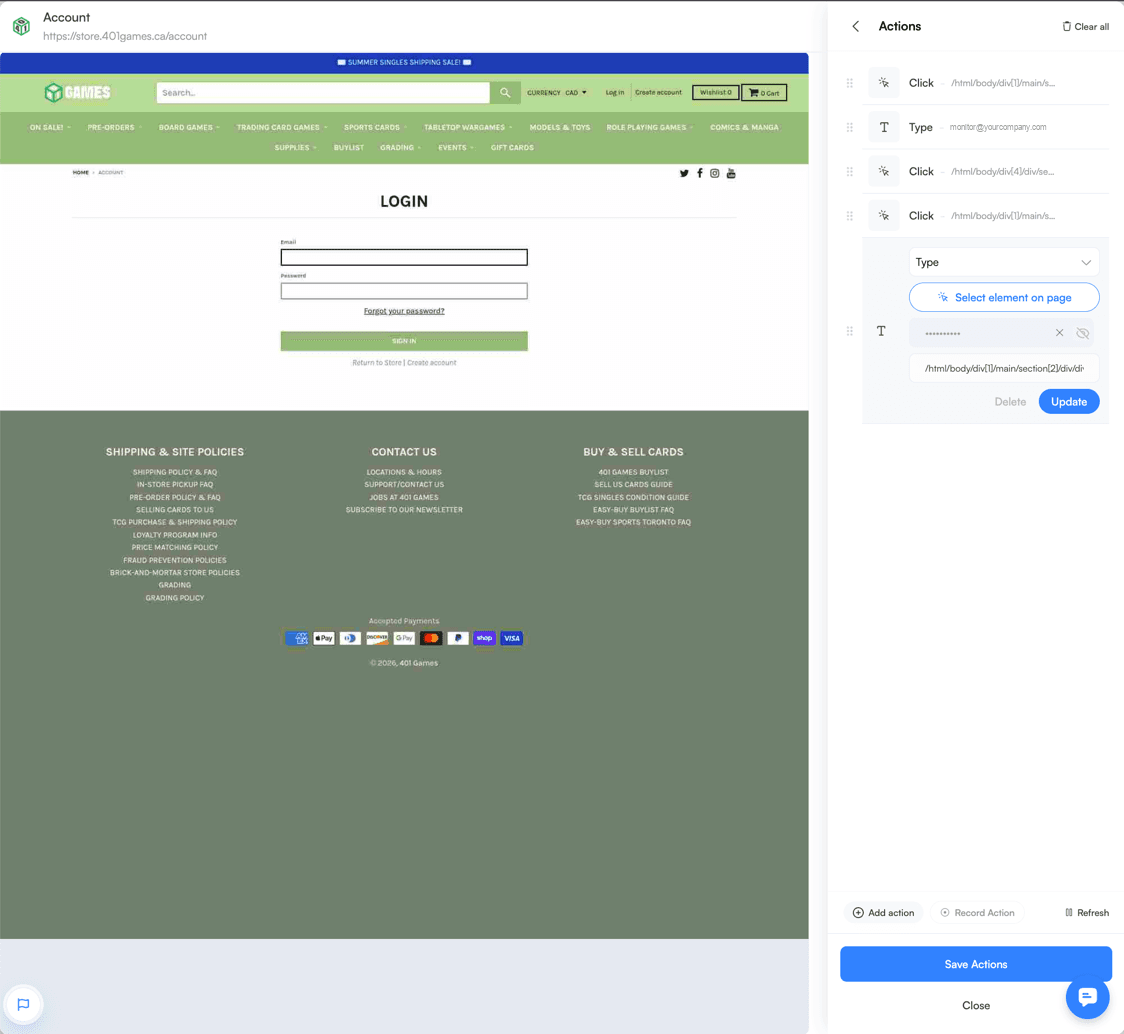
Step 5. Click the sign-in button. Add a Click action and use Select element on page to point at it. The picker highlights whatever you hover in the preview and drops the selector in for you. If a page resists the picker, type a CSS selector or XPath into the field instead: input[type="password"] and button[type="submit"] handle a surprising number of login forms.
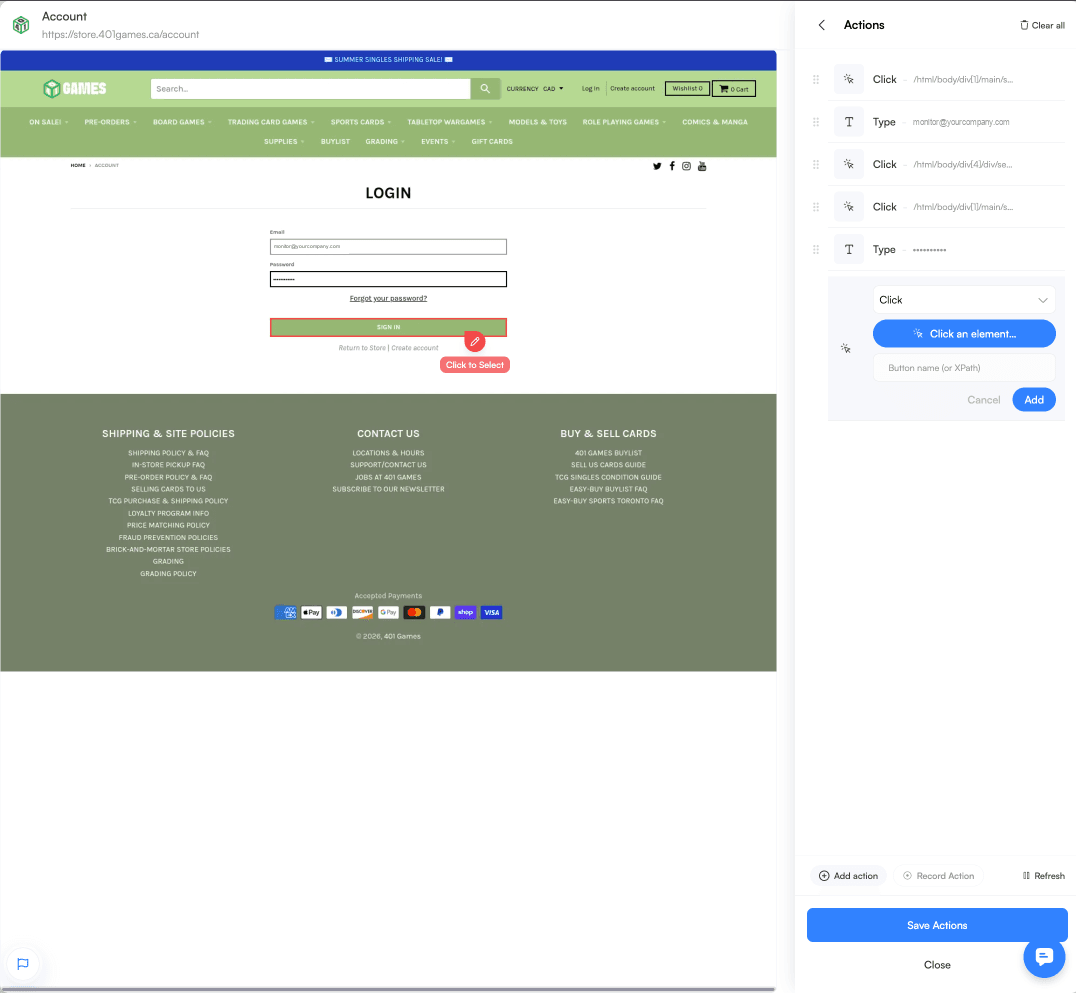
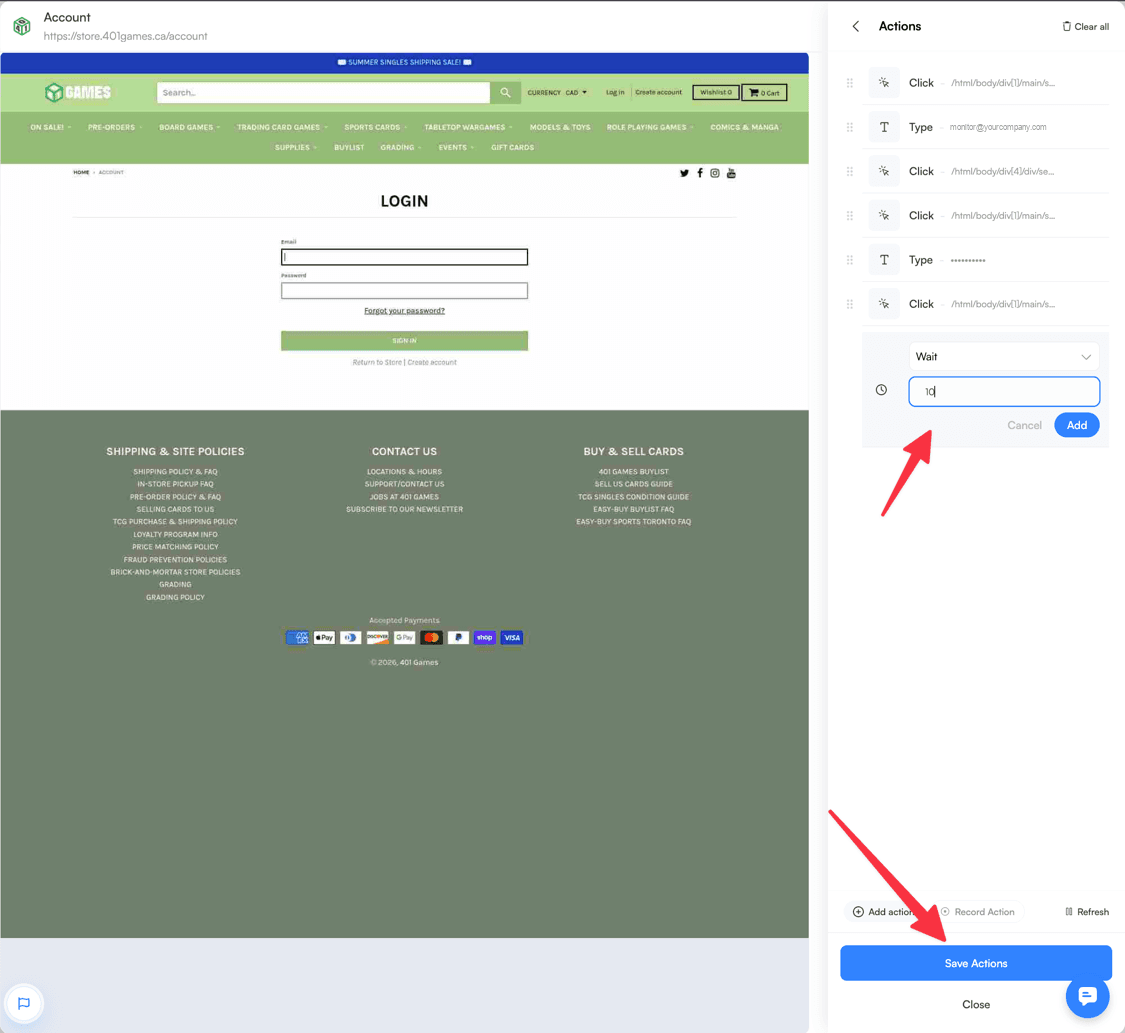
Step 6. Add a Wait, then save. Sign-in is rarely instant. A Wait of five to ten seconds gives the authenticated page time to render before the snapshot fires. Without it you get a monitor that faithfully tracks a loading spinner. Click Save Actions.
Step 7. Set the frequency and start monitoring. Pick how often to check, then Start monitoring.
One thing the old version of this guide got wrong
Look closely at the action list in that last screenshot: seven steps, not three. Real login forms need focus clicks before the fields accept text, and this one needed a click to open the form at all. Building a sequence is usually a few rounds of add-a-step, run it, see where the preview stops. That is normal. The preview is the feedback loop, so use it after each action rather than building all seven and wondering which one broke.
Two more patterns worth knowing
Filling a search or location field. Same shape, fewer steps. A Type action puts your postal code or search term in the field, a Click submits, and a Wait lets results load. This is how you monitor stock at a specific store, appointment slots in your area, or search results for a term that has no shareable URL.
Clearing what blocks the content. Cookie banners and newsletter pop-ups cover the thing you want and change often enough to trigger alerts on their own. A Block action removes the element before capture. Visualping already blocks common cookie and ad pop-ups automatically, so reach for Block when something specific survives.
Recording steps instead of building them
If clicking through the flow yourself sounds easier than picking selectors, record it. The Chrome extension and the Record Action button capture what you do in a browser tab and turn it into the same list of actions. Recording produces a cloud monitor, the kind that keeps checking whether or not your browser is open.
Local monitors work differently and it is worth knowing which you want. A local monitor checks the page inside your own signed-in browser, so it needs no login steps at all: if you can see the page in Chrome, it can watch it. That is the path for anything protected by two-factor authentication or single sign-on, where a replayed username and password cannot get through. The trade-off is that local checks only run while Chrome is open.
Credentials, handled sensibly
Treat a login you give any monitoring tool the way you would treat it anywhere else. Use a dedicated account with the least access that still shows you the page, rather than an admin login. The hide option masks the value in the Visualping interface, which keeps it from colleagues glancing at a shared workspace. If you would rather a password never leave your machine at all, use a local monitor in the Chrome extension and skip stored credentials entirely.
What you get when the page changes
Every change comes with two things. A plain-English AI summary of what actually moved, so you do not compare screenshots yourself. And a binary important flag, set by the condition you wrote in step 2, that separates the update you asked about from the other things that happened to change on the page. You still see everything; the flag just tells you where to look first.
FAQ
Do Actions cost extra, or need a paid plan? No. Actions are available on every plan, including the free one, which covers 5 pages and 150 checks a month.
Can Actions get through two-factor authentication? No. A replayed sequence cannot receive a code. Use a local monitor in the Chrome extension, which checks the page in the browser session you are already signed in to.
What happens when the site logs me out? An action-based monitor signs in fresh on every check, so an expired session is not a problem. You will see the login page reported as a change if the credentials stop working, which is a useful signal in itself.
The element picker will not select what I want. Now what? Type the selector by hand. Right-click the element in Chrome, choose Inspect, then copy the CSS selector or XPath. Pages that layer a transparent overlay over their content defeat the picker, and a typed selector goes straight through.
Where can I read more about the login case specifically? How to monitor password-protected websites covers both methods in more depth, including single sign-on, session expiry, and the security trade-offs.
Want to monitor web pages for changes?
Sign up with Visualping to get notified of alerts from anywhere online, so you can save time, while staying in the know.
Emily Fenton
Emily was the Product Marketing Manager at Visualping. She has a degree in English Literature and a Masters in Management.
More articles by Emily Fenton