What the Internet Was Refreshing in March 2026
Updated March 16, 2026

What people automate reveals what they actually care about
Every month, thousands of people set up new website monitors on Visualping. Each one is a small bet: something on this page is about to change, and I need to know the second it does.
We pulled the data on every new monitor created in March 2026 to map the latest website monitoring trends. Not what people tweeted about or clicked on. What they cared about enough to automate.
The most-monitored site in March was a French wine marathon
The single most-monitored domain by unique users in March was marathondumedoc.com. It beat Amazon, Costco, and every other retail giant.
The Marathon du Médoc is a 26-mile race through Bordeaux vineyards where runners stop at 23 chateaux to drink wine along the route. Registration opened in March. Slots are limited. And 228 people decided that manually refreshing the page wasn't going to cut it.
88% of them set their monitors to the most aggressive frequency: every 5 minutes or less. 69% caught a change within the month.
228 people automated their F5 key for the chance to run a marathon while drinking Pauillac. That's the internet at its most human.
 228 people automated their F5 key for a wine marathon
1,300 people stopped refreshing retail sites by hand
The biggest category was retail, spread across every major storefront on the internet.
869 users set up new restock alerts across Amazon, Costco, Walmart, Best Buy, and Target in March. Another 455 watched specialty and fashion retailers. The breakdown shows where the urgency runs hottest:
| Category | New Users | % Checking Every 5 Min | Business vs Personal |
|---|---|---|---|
| Major Retailers (Amazon, Costco, Walmart, Best Buy, Target) | 869 | 29% | 94% personal |
| Specialty/Fashion (Pokémon Center, Hermès, Zara, Uniqlo, Nike, IKEA) | 455 | 38% | 87% personal |
| Tech/Product Launches (Steam, Apple, Tesla) | 306 | 35% | 88% personal |
Specialty retail monitors check more urgently than major retail monitors. Pokémon Center and Hermès watchers are hunting specific items, and the check frequency reflects it.
Where the obsession runs deepest
The most intense monitoring happened on smaller sites where supply is genuinely scarce:
Pokémon Center had 132 users monitoring individual product SKUs (not the homepage, specific items). 47% on 5-minute checks. 32% caught a Pokémon restock within the month.
Hermès had 26 users watching hermes.com. Nobody monitors Hermès for price drops. These are people waiting for a specific bag to appear in stock. 32% caught a change.
Vuori Clothing had 22 users. A DTC athleisure brand with enough demand that people are automating restock alerts. 42% caught a change: the highest hit rate of any niche brand we tracked.
Rare Breed Triggers had 24 users, 75% on 5-minute checks. A firearms accessory company with limited-run products. Small audience, high urgency.
Go deeper: How to Set Up Restock Alerts | In-Stock Alert Guide | Price Tracker and Deal Alerts
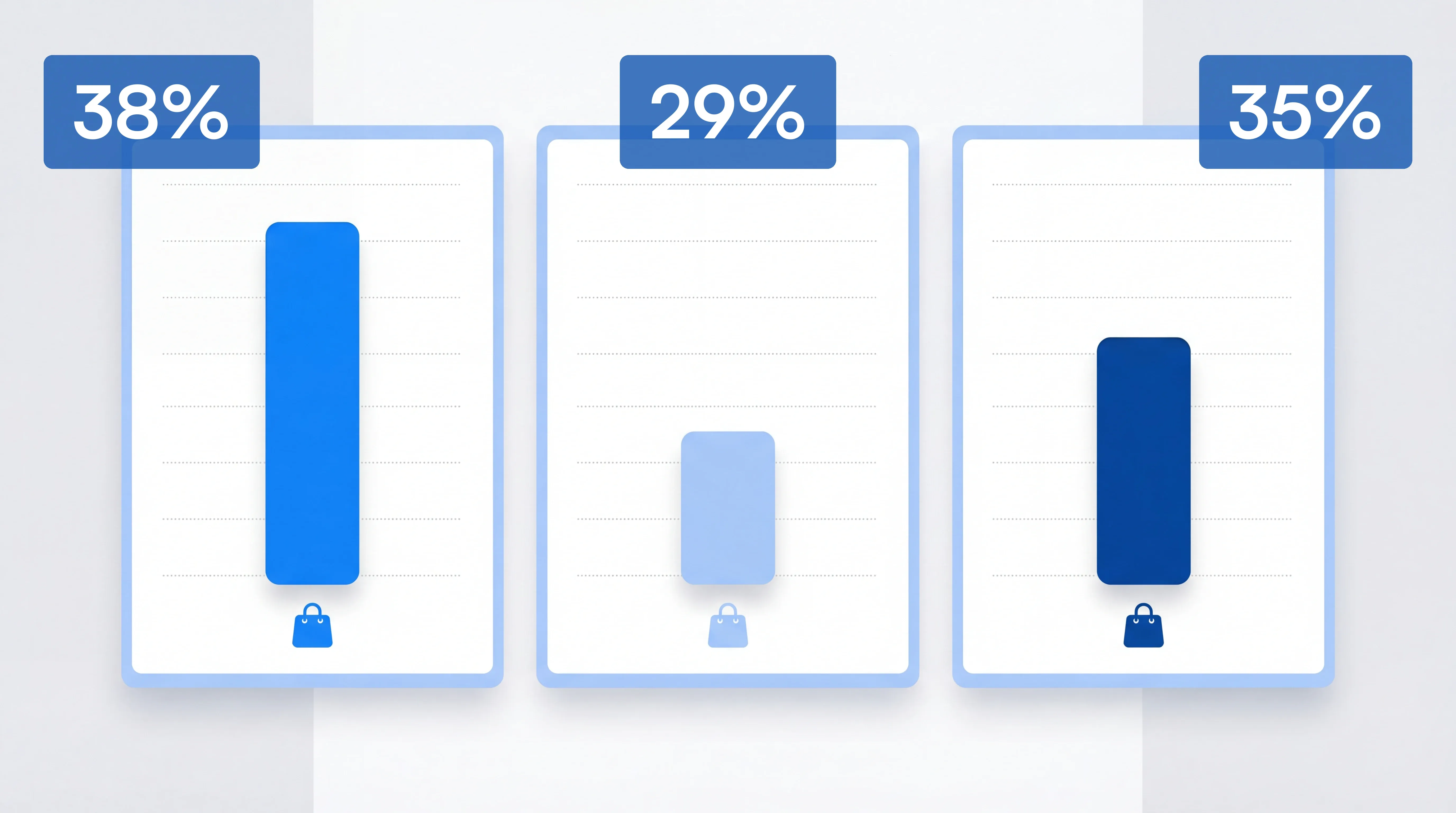 Specialty retail monitors check more urgently than big-box stores
"Will it come back in stock?" overtook "Will it go on sale?"
When new users sign up for Visualping, we ask why they're here. In March 2026, the answers looked like this:
- 1,631 new users said "out of stock alerts," the #1 reason people joined
- 1,169 said "price tracking"
- 500 said "news and press monitoring"
- 393 said "competitor monitoring"
- 301 said "laws and regulations"
Out-of-stock monitoring outpaces price tracking by 40%. It has held the #1 spot for months. The anxiety is well-founded: IHL Group's 2025 research pegs the global cost of inventory distortion (out-of-stocks plus overstocks) at $1.77 trillion per year, with out-of-stocks alone accounting for $1.2 trillion. People used to ask "when will this go on sale?" Now they ask "when will this exist again?"
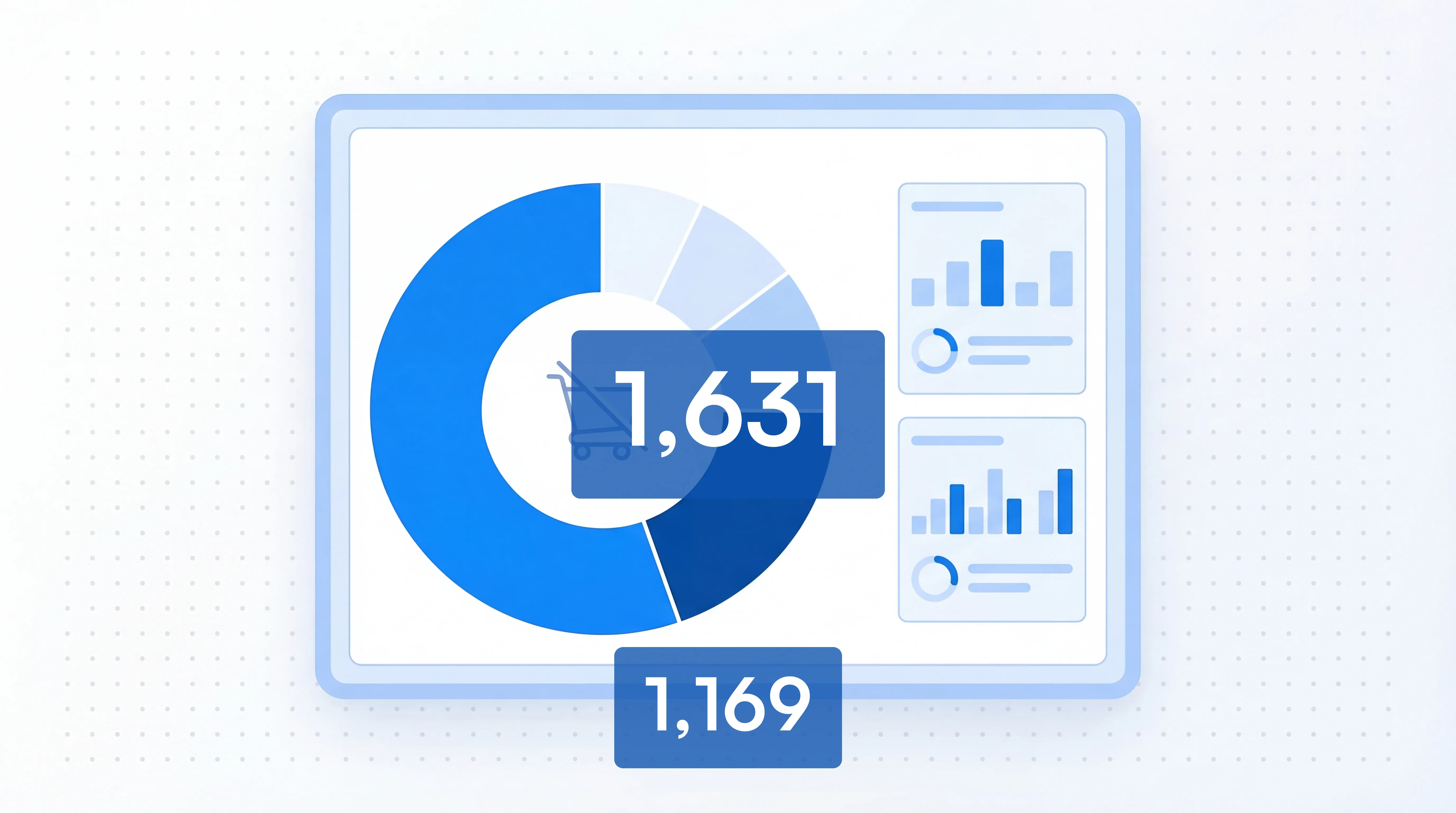 Out-of-stock alerts outpace price tracking by 40 percent
The Costco effect
Costco earns its own section. Across costco.com and costco.ca, 286 users created new monitors in March. 98% were personal accounts. Average check frequency: every 25 minutes.
This makes sense if you know how Costco works. Limited inventory, rotating deals, members-only pricing. You can't search for what Costco will stock next week. But you can watch the page and get an alert when the $1,999 patio set appears.
Add up all the major retailers (Amazon at 108 users, Costco at 286, Walmart at 124, Best Buy at 157, Target at 51) and a pattern emerges. These are people who have moved past browsing. They treat product pages as data feeds. When the page changes, they buy.
Government pages: the category where business accounts dominate
The quietest category was government websites. Also the one with the most money behind it.
948 users created new monitors on government domains (.gov, .gov.uk, canada.ca) in March. 82% of those monitors came from business accounts. That's the inverse of every other category, where personal accounts make up 87-98% of the volume.
The logic is different here. An individual monitors amazon.com because they want a deal. A business monitors canada.ca or sec.gov because a regulatory change can land on any Tuesday, and missing it has real consequences. The urgency is lower (only 9% on 5-minute checks) but the stakes are higher. A missed Costco deal costs you a patio set. A missed filing deadline costs you a compliance violation.
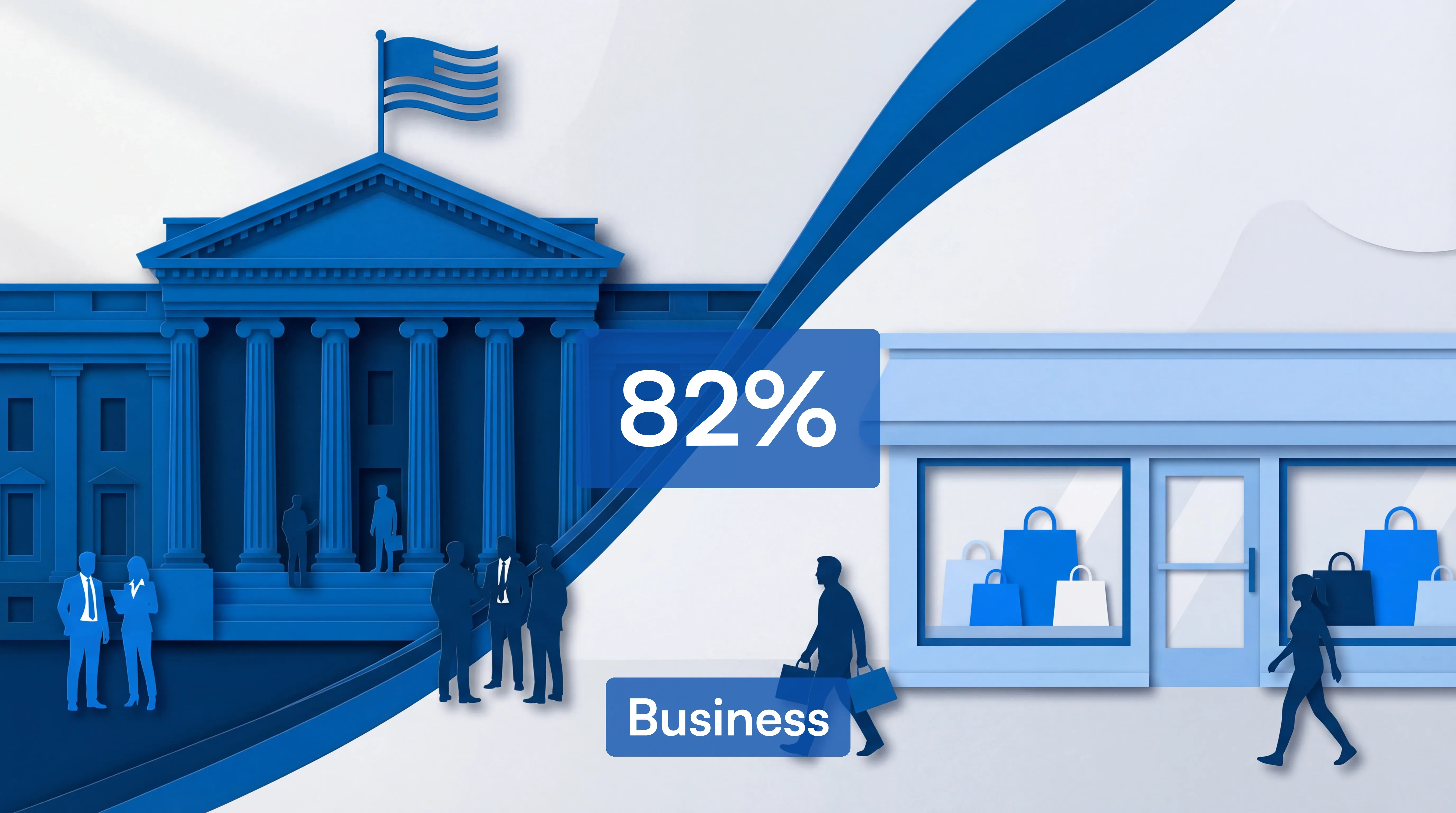 Government monitoring flips the personal versus business ratio
Steam, Apple, and Tesla: the product launch watchers
306 users set up monitors across Steam (150), Apple (114), and Tesla (25) in March. The products are different but the behavior is identical: watch a page, wait for something new to appear or a price to move.
Steam users watch store pages for game releases and sales (Steam runs seasonal sales events roughly every quarter, and timing matters). Apple watchers track product pages for new models or configuration changes. Tesla monitors watch for delivery dates, new model availability, and pricing.
One detail that stood out: zero business accounts monitored Steam. All 150 monitors are individual gamers watching for the next sale. Apple and Tesla pulled about 12% business accounts, probably resellers or analysts tracking pricing moves.
35% of tech monitors used 5-minute checks. These people have decided that being first matters.
What website monitoring trends tell you that click data can't
Most internet behavior analysis looks at what people post, share, and click. Monitoring behavior shows something else entirely: what people care about enough to automate.
Nobody sets up a 5-minute monitor on a page they're mildly curious about. Creating a monitor is a quiet declaration: this page will change, the change matters to me, and I don't trust myself to catch it by hand.
Four patterns stood out in March:
Availability anxiety has overtaken price anxiety. Out-of-stock alerts outpace price tracking by 40% as the #1 reason people sign up. The dominant question is now "when will this exist again?"
Niche passion runs hotter than mass-market convenience. Pokémon Center and Hermès monitors check more urgently than Amazon monitors. Scarcity sharpens attention.
Business monitoring clusters around regulatory content. 82% of government page monitors come from business accounts. Compliance work doesn't wait.
The restock economy is a real behavior pattern. Over 1,300 users set up retail monitors in a single month. Not power users. Not bots. Regular people who got tired of refreshing.
And then there's the Marathon du Médoc. 228 people wanted to run a wine marathon badly enough to automate their registration watch. Pure devotion.
 Pure devotion
Frequently asked questions
What are the most monitored websites?
The surprise winner in March 2026 was marathondumedoc.com (228 unique users), followed by Costco (286 users across .com and .ca), Steam (150 users), Pokémon Center (132 users), and Apple (114 users). Major retailers like Amazon, Walmart, Best Buy, and Target all landed in the top 15.
Why do people use website monitoring?
We ask every new user during onboarding. In March 2026: out-of-stock alerts (1,631 users), price tracking (1,169), news monitoring (500), competitor monitoring (393), and regulatory compliance (301). Restock alerts have held the #1 spot for several consecutive months now.
Do businesses monitor websites differently than individuals?
Very differently. 82% of government website monitors come from business accounts, compared to 2-13% for retail sites. Businesses watch regulatory and compliance pages at lower frequencies (daily or hourly) but with higher stakes. Individuals dominate retail, gaming, and fashion with more aggressive checks (every 5 minutes or less).
What is the most common website monitoring frequency?
It depends on what you're watching. For high-demand restocks (Pokémon Center, Rare Breed Triggers), 47-75% of users choose every 5 minutes. For government pages, most users check every few hours or daily. The overall average across all new March 2026 monitors was every 20 minutes.
How effective is website monitoring at catching changes?
Detection rates in March 2026 varied by domain: 69% of Marathon du Médoc monitors caught a change, 42% of Vuori Clothing monitors, 39% of Abercrombie monitors, and 32% of Pokémon Center monitors detected a restock within the month. Pages that change frequently (like registration pages with limited slots) have the highest catch rates.
Want to monitor web changes that impact your business?
Sign up with Visualping to get alerted of important updates from anywhere online.
Eric Do Couto
Eric Do Couto is the Head of Marketing at Visualping. He leads content strategy, growth operations, and brand positioning for website change detection.
More articles by Eric Do Couto