Walmart Price Tracker: 5 Ways to Track Prices and Get Drop Alerts
Updated February 27, 2026
TL;DR: Paste any Walmart product URL into Visualping, select the price area, set a threshold rule (e.g., "alert me when price drops below $150"), and choose your check frequency. You will get an email alert the moment the price changes, with a screenshot showing exactly what changed.
Walmart is the largest retailer in the United States by revenue, and its online marketplace now hosts over 100,000 third-party sellers alongside Walmart's own inventory. That means more products, more sellers, and more price fluctuation than ever. Prices on Walmart.com can shift multiple times per day based on competitor pricing, inventory levels, and promotional cycles like Rollbacks and Clearance events.
Without a walmart price tracker, you are either refreshing product pages manually or missing price drops that last only hours. This guide compares the five best ways to track Walmart prices in 2026 so you can pick the right method for how you shop.
How Walmart pricing works (and why tracking saves you money)
Walmart uses a pricing system built around several mechanisms that create constant price movement:
Rollbacks are Walmart's signature temporary price reductions. A Rollback can last anywhere from a few days to several weeks, and the end date is not displayed on the product page. When the Rollback expires, the price snaps back to its original level without warning. Tracking the price lets you buy during the Rollback window instead of discovering it ended yesterday.
Everyday Low Price (EDLP) is Walmart's baseline pricing strategy, but it applies unevenly across categories. Electronics, seasonal goods, and marketplace seller items often deviate from EDLP with frequent fluctuations. Do not assume "Everyday Low Price" means the price never changes.
Marketplace seller competition adds another layer. Products sold by third-party sellers through Walmart's marketplace can have wildly different pricing from the same item "Sold and shipped by Walmart." The Buy Box equivalent on Walmart.com rotates between sellers based on price, fulfillment speed, and seller rating, which means the default price you see can change depending on which seller currently wins that placement.
Walmart+ member pricing offers early access to deals and exclusive discounts that non-members cannot see until the promotion goes public. Tracking prices as a Walmart+ member can reveal savings opportunities that do not appear for regular shoppers.
Seasonal events like Walmart Deals (formerly Deals for Days, Walmart's answer to Prime Day), Black Friday, and Cyber Monday create sharp, short-lived price drops across thousands of products. Without a walmart price tracker sending automated alerts, you are competing against millions of other shoppers who are refreshing the same pages.
Walmart uses several pricing mechanisms that create constant price movement
How to track Walmart prices: 5 walmart price tracker methods compared
Method 1: Visualping (full-page price monitoring)
Visualping monitors any webpage for visual changes. For Walmart price tracking, it watches the actual rendered product page rather than relying on data feeds that Walmart can restrict or delay.
Setup takes about 60 seconds:
- Copy the Walmart product URL
- Paste it into Visualping
- Select the price area on the page (drag to highlight just the price section near "Add to cart")
- Add a prompt for Visualping AI: "Alert me when price drops below $150"
- Set your check frequency: every 5 minutes during sales events, hourly or daily for regular monitoring
- Enter your email and start monitoring
What makes it different from other walmart price tracker tools:
- Works in the background without keeping your browser open or an app installed
- Monitors any element on the page: price, stock status, shipping time, seller info, Rollback badges
- Sends email alerts with before/after screenshots so you can see exactly what changed
- Handles Walmart's dynamic page rendering, which breaks many browser extensions
- Works on any retailer, not just Walmart. You can track the same product on Amazon, Best Buy, and eBay with the same setup process
- Free tier available with paid plans for higher-frequency checks
Visualping can also detect non-price changes on Walmart product pages. If a Rollback badge appears, a product goes out of stock, or the seller changes from "Walmart" to a third-party marketplace seller, you will get an alert. This makes it useful beyond pure price tracking.
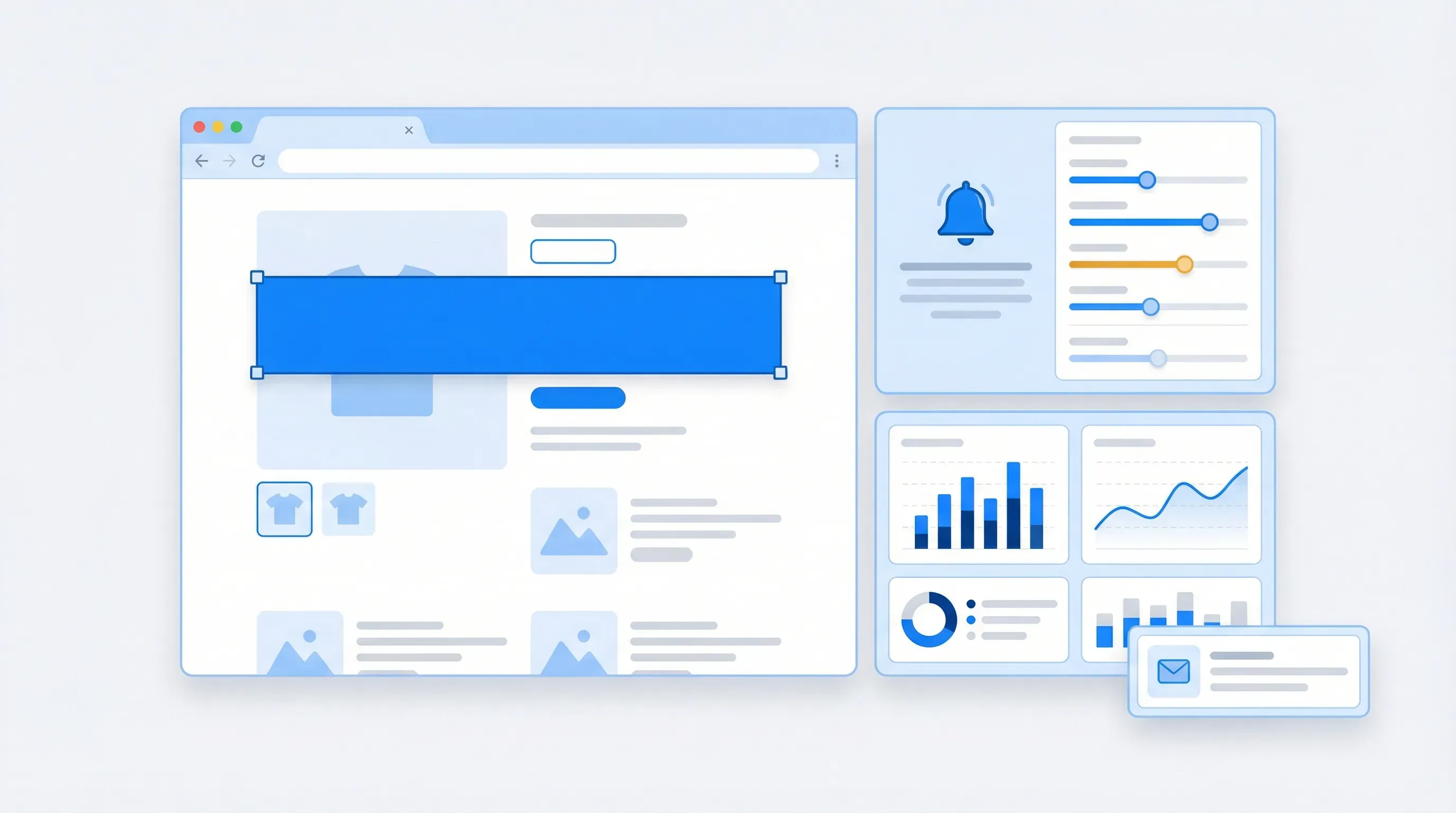 Setup takes about 60 seconds from URL to first alert
Related: Walmart in-stock alerts: how to get notified when items are available
Method 2: BuyRadar (Walmart-focused deal tracker)
BuyRadar is a price tracking tool specifically built for Walmart products. It pulls pricing data from Walmart.com and displays price history charts.
How to use it:
- Search for a product on BuyRadar or paste a Walmart product URL
- View the price history chart showing price fluctuations over time
- Set a target price and receive an email when the product hits that level
Strengths:
- Built specifically for Walmart (understands Rollbacks and price categories)
- Price history charts for many Walmart products
- Free to use for basic tracking
Limitations:
- Only tracks Walmart (cannot compare prices across retailers)
- Relies on data feeds that may not update in real time
- Cannot detect visual page changes like Rollback badges or seller switches
- Limited customization for alert conditions
Method 3: Browser extensions (Waltrack, Sellegr8)
Several Chrome extensions offer Walmart price tracking directly in your browser. Waltrack and Sellegr8 are the most popular options, adding price history overlays to Walmart product pages. Visualping's extension works on any retailer, with a one-minute Chrome setup walkthrough.
How to use them:
- Install the extension from the Chrome Web Store
- Browse Walmart.com normally. The extension injects price data on product pages.
- Set price drop alerts for products you want to track
- Receive notifications when prices drop
Strengths:
- See price history while you are already browsing Walmart
- Quick to set up (just install and browse)
- Some extensions support multiple retailers
Limitations:
- Require your browser to be open to monitor prices (no background tracking)
- Chrome-only in most cases (no Firefox or Safari support)
- Can slow down page loading on Walmart.com
- Extension updates can break functionality when Walmart changes its page layout
- Limited alert customization compared to dedicated tools
Method 4: Walmart app's built-in price checker
Walmart's mobile app includes a walmart price checker feature that lets you scan barcodes in-store to see the current price, check for Rollbacks, and compare online vs. in-store pricing.
How to use it:
- Download the Walmart app and log into your account
- Set the app to your local store
- Tap the scanner icon and scan any item's barcode
- View the current price, any active Rollbacks, and whether the item is cheaper online
Strengths:
- Official Walmart tool, always accurate for current in-store prices
- Works for in-store shopping (something online trackers cannot do)
- Shows Rollback and Clearance status
- Free, no third-party tools needed
Limitations:
- Only shows the current price, not price history
- No automated alerts (you must manually scan each time)
- Cannot set a target price and wait for it to drop
- Does not track prices over time or across sellers
- Designed for in-store use, not for monitoring online prices over weeks or months
The Walmart app is useful for checking whether you are getting a good deal while standing in the store. But for tracking prices over time and getting automatic alerts when something drops, you need a dedicated walmart price tracker like Visualping or BuyRadar.
Method 5: Google Shopping price tracking
Google Shopping includes a price tracking feature that works across retailers, including Walmart.
How to use it:
- Search for a product on Google Shopping
- Click "Track price" on the product listing
- Google sends notifications through the Google app or email when the price drops
Strengths:
- Free and built into Google
- Compares prices across Walmart, Amazon, Best Buy, and other retailers automatically
- Available on mobile and desktop
Limitations:
- Only tracks products indexed in Google Shopping (not all Walmart products appear)
- Limited notification controls (no custom thresholds)
- No detailed price history charts
- Can be slow to detect price changes compared to dedicated tools
- Relies on Google's product data, which may lag behind real-time Walmart pricing
Walmart price tracker comparison (2026)
| Feature | Visualping | BuyRadar | Browser extensions | Walmart app | Google Shopping |
|---|---|---|---|---|---|
| Price drop alerts | Yes | Yes | Yes | No | Yes |
| Custom threshold ("alert below $X") | Yes (AI prompts) | Yes | Limited | No | No |
| Price history | Visual diff history | Yes | Yes | No | Limited |
| Works on other retailers | Yes (any website) | No | Some | No | Yes |
| Background monitoring | Yes | Yes | No (needs browser) | No | Yes |
| Visual change screenshots | Yes | No | No | No | No |
| Rollback/Clearance detection | Yes | Limited | Limited | Yes | No |
| In-store price checking | No | No | No | Yes | No |
| Free tier | Yes | Yes | Yes | Yes | Yes |
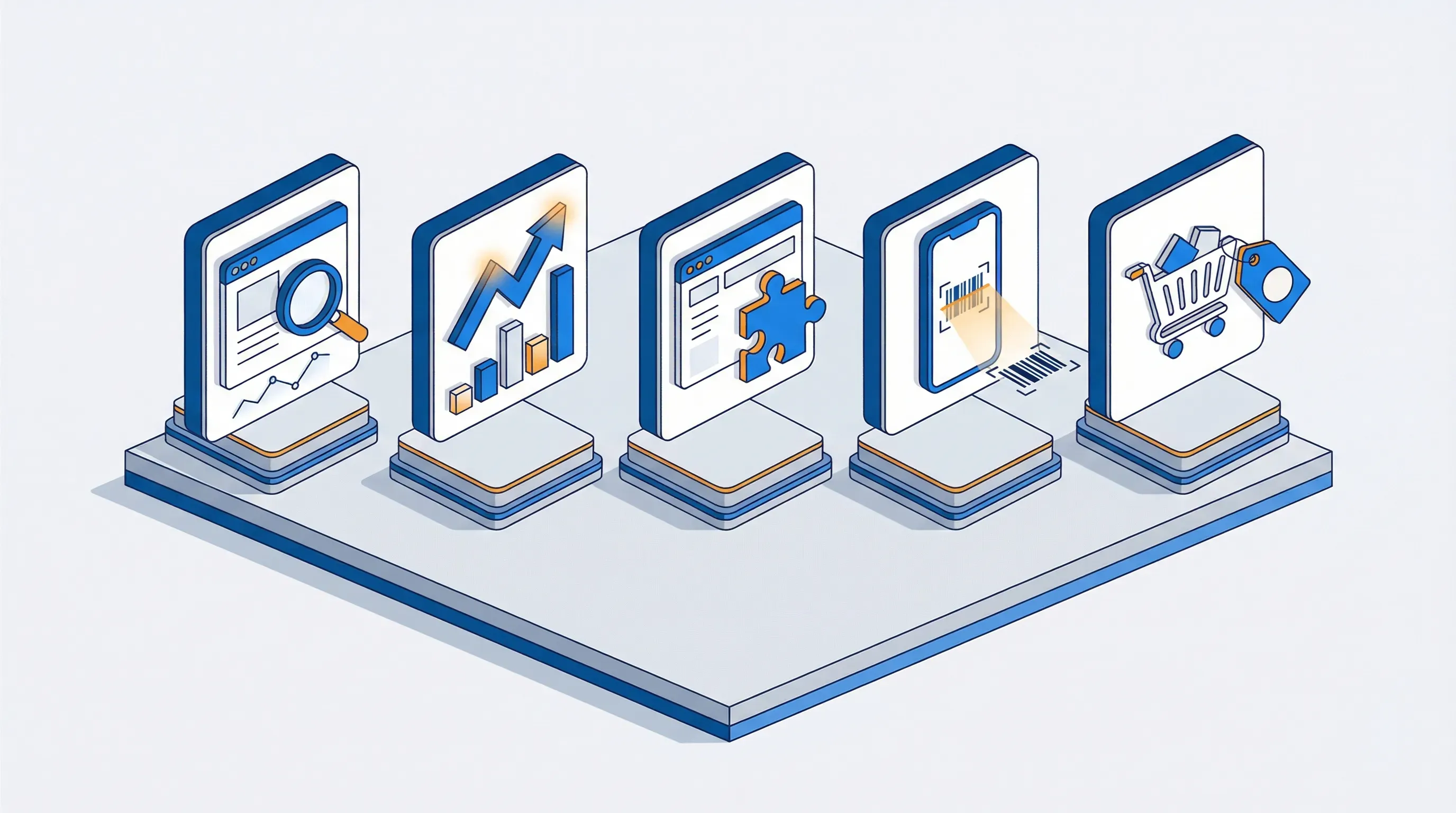 Each method has trade-offs depending on how you shop
How to spot fake Walmart deals and Rollbacks
Price tracking helps you find real savings and avoid manufactured discounts. Walmart's pricing is generally more transparent than Amazon's, but there are still patterns to watch for.
The Rollback that is not actually a deal. Not every Rollback represents a meaningful discount. Some Rollbacks reduce the price by only a few cents, while the product may have been cheaper at a different point in the year. A walmart price history tracker reveals whether the "Rollback" price is genuinely the lowest the product has been, or just a small dip from the regular price. The FTC recommends verifying discount claims against actual selling history before assuming a sale is genuine.
Marketplace seller pricing games. Third-party sellers on Walmart's marketplace can set their own prices. Some inflate prices before promotional events, then "discount" back to the normal range. This is harder to spot on Walmart than Amazon because Walmart's marketplace is newer and shoppers are less accustomed to checking seller identity. Always check whether a product is "Sold and shipped by Walmart" versus a marketplace seller before assuming a Rollback is legitimate.
The online-vs-store price mismatch. Walmart sometimes prices items differently online and in-store. A product might show a Rollback online but still be at full price in your local store, or vice versa. Using both an online tracker (Visualping) and the in-store walmart price checker (Walmart app) gives you the complete picture.
Tips for verifying Walmart deals:
- Compare the Rollback price against the product's 90-day price range
- Check whether the seller is Walmart or a marketplace third party
- Use the Walmart app to compare in-store vs. online pricing
- Track the price for at least 2 weeks before major sales events (Walmart Deals, Black Friday) to catch pre-event price inflation
- Set your target price below the recent average, not just below the current price
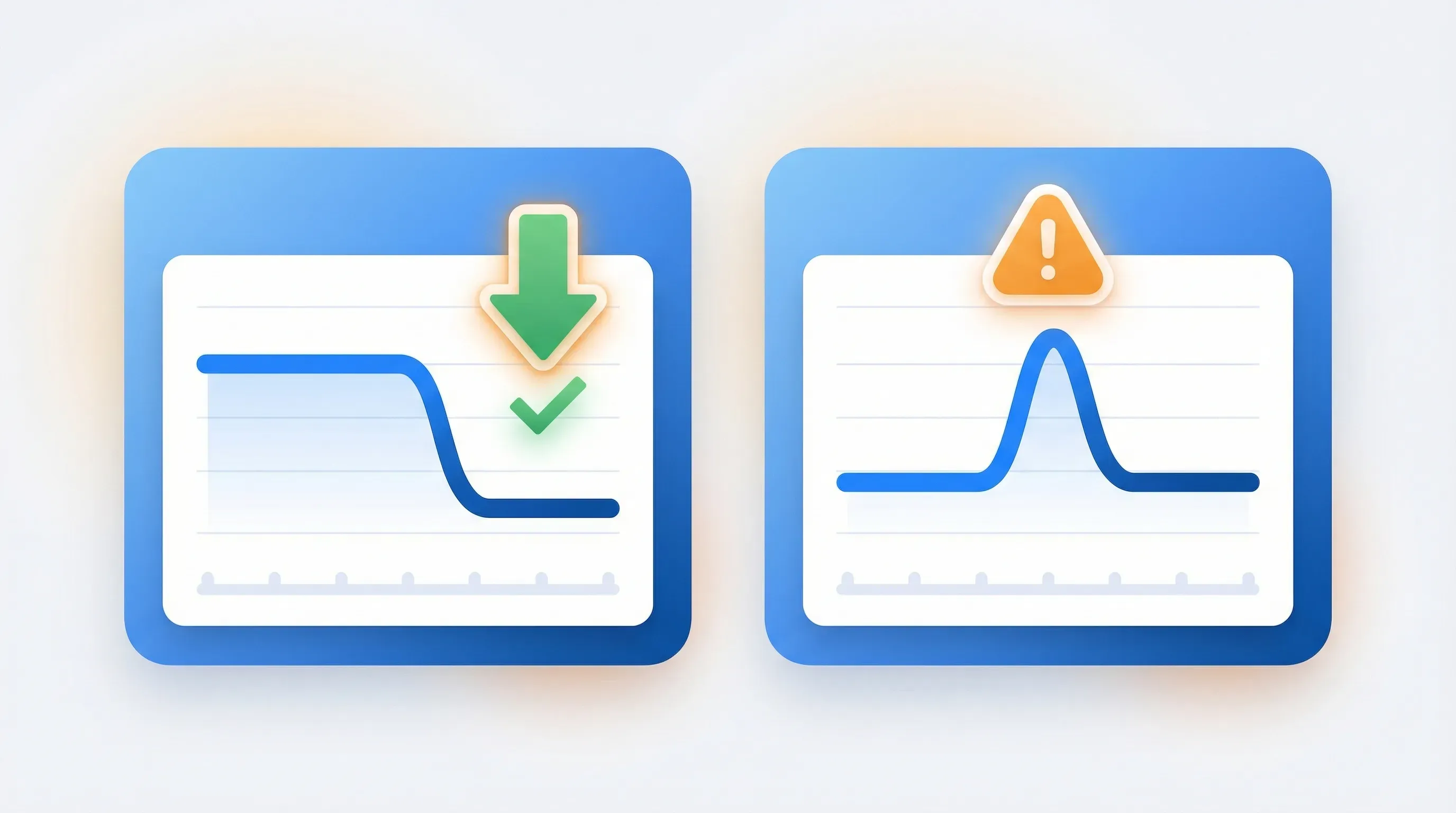 A price tracker reveals whether a Rollback discount is real or manufactured
Go deeper: Amazon price tracking: how to track prices and get drop alerts
Related: Best Buy price tracking
Walmart vs. Amazon vs. Target: cross-retailer price comparison
The same product is often available at Walmart, Amazon, and Target at different prices. Tracking prices on just one retailer means you might miss a better deal elsewhere. Here is how cross-retailer pricing typically works:
- Walmart tends to match or beat Amazon on household essentials, groceries, and basic electronics. Walmart's EDLP strategy keeps these categories competitive.
- Amazon tends to win on niche electronics, books, and long-tail products where its marketplace has more sellers competing on price.
- Target often offers the best deals on home goods, apparel, and seasonal items, especially with Target Circle promotions.
The most effective approach is to use a walmart price tracker that also works on other retailers, then monitor the same product across all three simultaneously. Visualping makes this straightforward: set up one monitor for the Walmart product page, one for the Amazon listing, and one for the Target page. When any of them drops to your target, you buy from whichever retailer has the lowest price.
For a broader look at price comparison tools, see our guide to competitor price tracking tools.
Best practices for Walmart price tracking
Set the right check frequency
- During sales events (Walmart Deals, Black Friday, Cyber Monday): Check every 5 to 15 minutes. Rollbacks and lightning deals can appear and sell out within hours.
- For wishlist items you are not in a hurry for: Check daily. You will catch any meaningful drops without using up monitoring credits.
- For competitive intelligence or business use: Check hourly. This captures most pricing algorithm changes without excessive monitoring costs.
Use threshold alerts, not change alerts
Getting notified every time a price fluctuates by $0.50 creates noise. Set a specific target: "Alert me when this TV drops below $350." That way you only hear about changes that matter enough to act on.
Monitor the right page element
Walmart product pages contain a lot of dynamic content: reviews, "Customers also bought" sections, and rotating ads. When setting up a visual monitor in Visualping, select just the price area rather than the entire page. This prevents alerts triggered by irrelevant changes.
Track Rollbacks specifically
You can set Visualping to watch for the word "Rollback" appearing on a product page. Create a monitor with the AI prompt: "Alert me when this page shows Rollback or Clearance." This catches the start of a promotion even before you know the exact discount amount.
Track marketplace sellers vs. Walmart
If you prefer buying from Walmart directly (for easier returns and consistent quality), monitor the "Sold and shipped by Walmart" designation. Visualping can alert you when the seller changes, so you know whether you are buying from Walmart or a third-party marketplace seller.
Combine price tracking with in-stock alerts
For high-demand items like gaming consoles, limited-run products, or popular toys during the holidays, price tracking alone is not enough. You also need to know when the item comes back in stock. Set up one Visualping monitor for price and another for the "Add to cart" or "Available for pickup" button.
Start monitoring 2 to 3 weeks before you need it
If you know you need a product by a certain date, start tracking well in advance. Walmart prices are unpredictable, but you increase your odds by giving the tracker more time to catch a drop. For holiday shopping, start in early November rather than waiting for Black Friday.
 These four habits help you capture every meaningful price drop
Advanced: Walmart price tracking for businesses
Businesses use Walmart price monitoring for higher-stakes use cases than saving on personal purchases:
Competitive pricing intelligence
Sellers on Walmart Marketplace track competitor prices to adjust their own pricing in real time. If a competitor drops their price by 10%, you want to know immediately so you can decide whether to match, undercut, or hold. Tools like Visualping can monitor competitor product pages across Walmart and other marketplaces from a single dashboard.
MAP (Minimum Advertised Price) compliance
Brands that sell through Walmart resellers need to monitor whether those resellers comply with MAP pricing policies. Walmart's marketplace has been growing rapidly, and more sellers means more potential MAP violations. Automated monitoring catches violations faster than manual audits, and Visualping's screenshot evidence can be used in enforcement conversations.
Price parity across channels
Businesses selling on both Walmart.com and their own website (or on Amazon, eBay, and Target) need to ensure pricing consistency across all channels. Walmart's marketplace agreement includes pricing rules that can affect your Buy Box placement if your prices are lower on other platforms. Monitoring prices across all channels helps maintain compliance and win placement.
Repricing strategy
Understanding how Walmart's algorithm and competitor sellers adjust prices over time helps you build a repricing strategy. Track 5 to 10 competitor products in your category over 30 days to identify pricing patterns, then adjust your own pricing rules based on real data rather than guesswork.
Frequently asked questions
Is there a price tracker for Walmart?
Yes. Several tools track Walmart prices, including Visualping, BuyRadar, and browser extensions like Waltrack and Sellegr8. Visualping is the most flexible option because it monitors any element on a Walmart product page (price, stock, seller, Rollback status) and works on any other retailer with the same setup. For in-store price checking, the Walmart app includes a barcode scanner that shows current prices and Rollback status.
Does Walmart have a built-in price tracker?
Walmart's app includes a walmart price checker that lets you scan barcodes to see current in-store prices and Rollback status. However, it does not track prices over time, set custom price alerts, or show price history. For automated price drop notifications, you need a third-party walmart price tracker like Visualping.
How do I check Walmart price history?
Use a tool like BuyRadar, Waltrack, or Visualping to see how a product's price has changed over time. BuyRadar and Waltrack show price history charts. Visualping takes a different approach by saving visual snapshots of the page each time it checks, creating a timeline of exactly how the price and page content have changed. This can reveal Rollback start and end dates, seller changes, and stock status shifts alongside price movements.
What is the difference between a Walmart Rollback and a sale?
A Rollback is Walmart's term for a temporary price reduction. Unlike a traditional sale with a published end date, Rollbacks have no visible expiration. The price simply reverts to its original level whenever Walmart decides. This makes price tracking especially important for Walmart: without monitoring, you have no way to know when a Rollback is about to end. Price tracking tools let you spot when a Rollback starts and buy before it expires.
Can I track Walmart prices across sellers?
Yes. Walmart product pages often show different prices depending on whether the item is sold by Walmart or by a marketplace seller. Visualping monitors the visible price on the page, which reflects whichever seller currently has the Buy Box. To track a specific seller's price, navigate to that seller's offer on Walmart.com and set up a separate monitor for that URL.
How accurate are Walmart price trackers?
Accuracy depends on the tool. Browser extensions and data-feed trackers (BuyRadar, Waltrack) depend on Walmart's product feeds, which may have slight delays. Visualping monitors the actual rendered page, so it captures the exact price displayed to a real visitor. This approach is more reliable when Walmart restricts data feeds or when prices differ based on location, Walmart+ membership, or seller rotation.
Can I track Walmart prices in Canada?
Yes. Visualping works on Walmart.ca with the same setup process as Walmart.com. Paste the Canadian Walmart product URL, select the price area, and set your alert. BuyRadar and most browser extensions are US-focused, so Visualping is typically the best option for tracking Walmart Canada prices.
Want to monitor web changes that impact your business?
Sign up with Visualping to get alerted of important updates from anywhere online.
Eric Do Couto
Eric Do Couto is the Head of Marketing at Visualping. He leads content strategy, growth operations, and brand positioning for website change detection.
More articles by Eric Do Couto