12 Competitive Advantage Examples (and How to Spot Them)
Updated June 11, 2026

A competitive advantage is whatever lets a company win customers or earn margins its rivals can't match. The 12 competitive advantage examples below are grouped by type, and each one comes with the detail most lists skip: where the advantage is visible on the company's public website, so you can verify it instead of taking it on faith. Teams that run this continuously often automate it: here's a Claude Code workflow that drafts the updates for human approval.
What a competitive advantage is
A competitive advantage is a durable edge that lets a company either sell at lower cost, charge more for something buyers value, or serve a niche better than generalists can. If a rival can copy it next quarter, it's a feature, and features don't hold margins. Advantages hold because something structural protects them: scale, brand trust, switching costs, location, or focus. Classifying who you're up against comes first; our guide to direct vs. indirect competitors covers the split and what to watch for each.
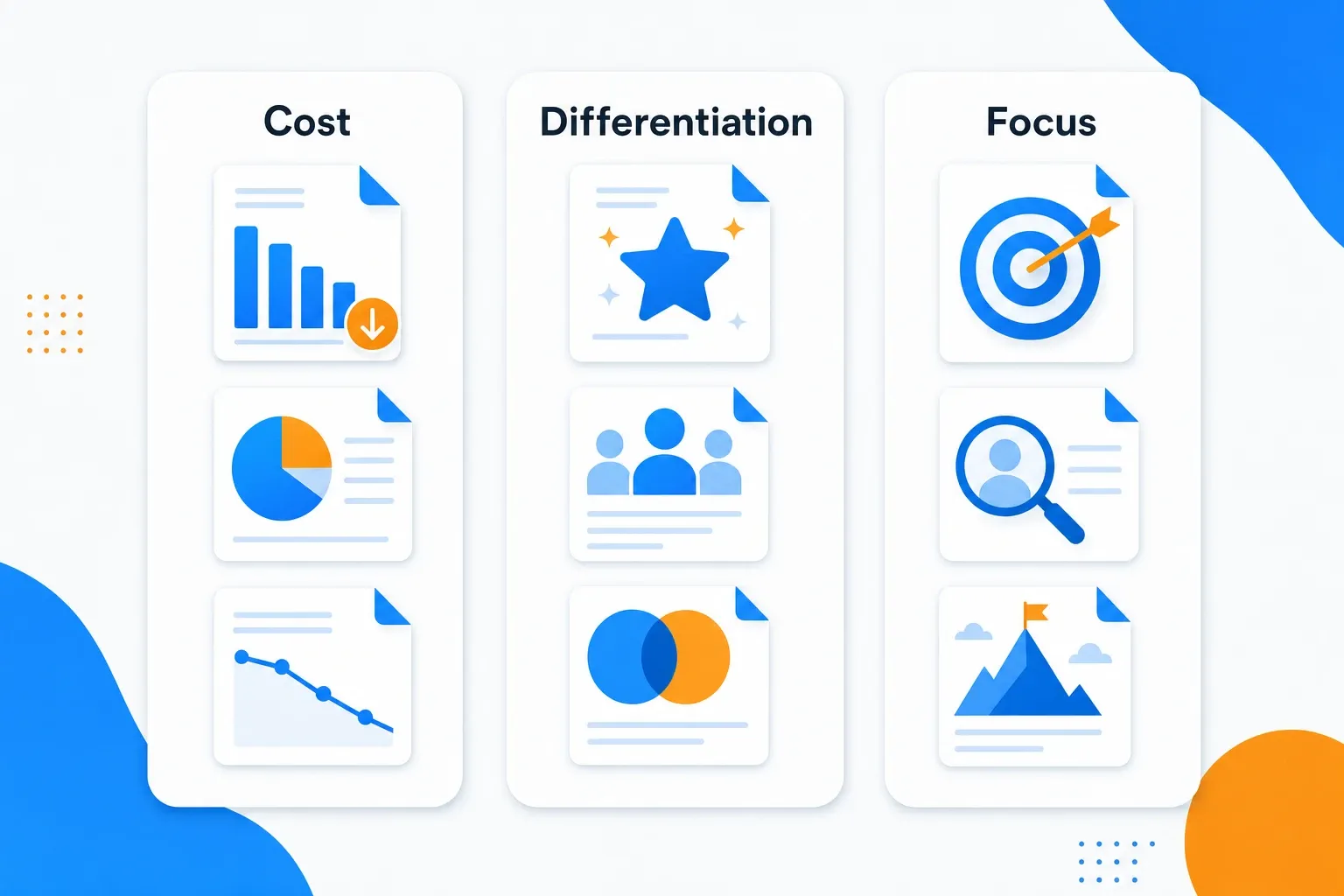
Finding and verifying these edges is the core job of competitive intelligence. Most typologies trace back to Michael Porter's strategy work: three generic strategies of cost leadership, differentiation, and focus. The "4 types" and "7 types" lists you'll see elsewhere are subdivisions of those three (brand, network effects, and switching costs are flavors of differentiation; proprietary process and scale are flavors of cost). Learn the three, and the competitive advantage examples below follow that grouping.
Cost leadership examples
Cost leaders win by delivering acceptable quality at a price structure rivals can't reach. The strategy pays off in markets where buyers see the products as interchangeable, which is why every example below pairs the cost mechanism with a public price signal: when the mechanism is real, the company can advertise prices its competitors would lose money matching.
1. Costco: membership funds the margins. Costco's membership fees cover most of its operating profit, which lets it price goods near cost. Hard to copy because it requires renouncing product margin for decades while renewal rates stay above 90 percent. Where it shows up publicly: the membership pricing page is the business model, and the famously unchanged food-court combo is a price message rivals can't afford to send.
2. IKEA: the customer does the assembly. Flat packing moves assembly labor to the buyer and multiplies how much product fits in a shipping container. Hard to copy because the entire design language, warehouse format, and logistics chain assume it. Where it shows up publicly: delivery and assembly pricing pages, where competitors' bundled costs make IKEA's split pricing look structural rather than promotional.
3. Walmart: procurement scale. Buying at Walmart's volume produces unit costs smaller retailers can't negotiate. Hard to copy because the scale IS the advantage; there's no shortcut to it. Where it shows up publicly: the breadth of always-low price positioning across categories, sustained for years without rotating back up.
4. Aldi: private label as the default. Around nine in ten products on Aldi shelves are own-brand, which strips out brand-marketing costs and middlemen. Hard to copy because a traditional grocer would have to fire its best-known suppliers. Where it shows up publicly: scan the online catalog and count how rarely a national brand appears.
Differentiation examples
Differentiators win by being meaningfully different in ways buyers pay extra for. The test is the premium: a real differentiation advantage shows up as prices that hold above the category average without bleeding share. The fragile version is a marketing claim; the durable version is a mechanism (patents, integration, earned trust) that would take a rival years to rebuild.
5. Apple: switching costs in an integrated product family. Each Apple device makes the next one more useful, and leaving means re-buying software, accessories, and habits. Hard to copy because the integration spans hardware, software, and services built over decades. Where it shows up publicly: trade-in calculators and migration guides, which quietly price what leaving (or arriving) costs.
6. Dyson: engineering you can demonstrate. Dyson holds patents on motor and airflow designs that support premium pricing in commodity categories. Hard to copy because the patents block the exact mechanism rather than the styling. Where it shows up publicly: product pages that lead with engineering claims and spec comparisons instead of lifestyle photography.
7. Patagonia: a brand promise with receipts. Repair-first policies and environmental commitments built trust that survives price comparisons. Hard to copy because a decade of consistent action can't be compressed into a campaign. Where it shows up publicly: the repair and used-gear pages, which an imitator would have to fund for years before anyone believed them.
8. Toyota: reliability that prices itself. Decades of defect-rate discipline turned into resale values that lower the real cost of ownership. Hard to copy because the reputation lags the engineering by years. Where it shows up publicly: certified pre-owned pricing, where the used market votes on reliability with money.
Focus and niche examples
Focus players win by serving one segment so well that generalists can't compete for it. The economics work because focus converts a small market into a defensible one: the niche is too small for a giant to redesign itself around, and too well-served for a same-size rival to wedge into. The observable tell is what the company refuses to do.
9. Trader Joe's: curation as the product. A deliberately small catalog of own-brand products for a specific shopper, with no price wars and no weekly ad cycle. Hard to copy because big grocers' economics depend on the SKU breadth Trader Joe's refuses. Where it shows up publicly: the absence tells the story, with no promotions page and a catalog a fraction of a supermarket's size.
10. In-N-Out: regional density, tiny menu. A short menu and tight geographic footprint keep quality consistent and supply lines short. Hard to copy because national chains can't shrink their menus or their maps without breaking franchise economics. Where it shows up publicly: a menu page you can read in ten seconds and a location map that stops at the distribution radius.
11. Credit unions: member-funded rates. Nonprofit structure returns margin to members as better rates on savings and loans. Hard to copy because shareholder-owned banks can't give the margin away. Where it shows up publicly: rate tables, compared directly against the national banks' published rates.
12. Lemonade: one buyer, one flow. Renters insurance built around an instant digital quote for first-time buyers, while incumbents route everyone through generalist funnels. Hard to copy because legacy systems and agent networks resist a single-segment redesign. Where it shows up publicly: time the quote flow yourself and count the form fields.
What these advantages look like in B2B software
The mechanics are identical in software; the public evidence just lives on different pages. Four signals worth reading on any rival's site:
- Switching costs show up in the integration directory and migration guides. Every integration a customer adopts is a cost they pay to leave, so watch the directory's growth rate, not its size.
- Enterprise focus shows up on the security page. SOC 2 reports, SSO options, and data residency arriving in quick succession announce a move upmarket months before the pricing page admits it.
- Cost position shows up in self-serve pricing and API rate tiers. A rival that can publish prices and fund a generous free tier is telling you about its cost structure, the same way Costco's food court does.
- Brand trust shows up as review mass on marketplaces and review sites. A ten-to-one review-count gap is an advantage no quarter of campaigns closes.
The same competitive pricing analysis habits that track a rival's price moves will surface most of these signals as a side effect.
How to identify a competitive advantage
Run any claimed advantage, yours or a rival's, through four tests:
- The durability test. Could a funded competitor neutralize it within a year? If yes, it's a feature, and it belongs on a battlecard as a play rather than a moat.
- The observability test. Can you point to public evidence: pricing structures, policies, patents, locations, rate tables? Advantages that exist only in pitch decks usually don't exist.
- The margin test. Does it show up as a price the company can charge, a cost it avoids, or retention it doesn't pay for? An advantage that never reaches the income statement is a story.
- The copyability test. What exactly would a rival have to give up to copy it? The best advantages force a painful trade (Aldi's suppliers, In-N-Out's map). If copying costs nothing, expect company.
Watch the tests work on the fictional matchup from our battlecard guide, Acme Metrics versus Northstar Analytics. Northstar's claimed advantage is deeper funnel analysis. Durability: it survives the year, because the depth comes from its instrumentation architecture. Observability: public, since its own docs require an instrumentation plan before week one. Margin: real, with quote-only pricing holding a premium. Copyability: Acme would have to rebuild onboarding around instrumentation and surrender its 15-minute setup. Verdict: a genuine advantage, so Acme routes around it and sells time-to-first-insight to single-product teams instead of contesting funnel depth.
For working through a specific rival's website with these tests, our guide to analyzing competitor websites covers where each piece of evidence lives. To run the audit on paper, download the advantage audit worksheet (.docx, no email gate): one block per claimed advantage, the four tests, and a confidence grade.
Sustainable vs. temporary advantages
Sustainable competitive advantage examples share one property: the protecting mechanism regenerates. Costco's membership renewals refill the moat annually; Apple's integration deepens with every product cycle; Toyota's resale data compounds. Temporary advantages spend down instead: a first-mover lead erodes as rivals ship, a pricing promotion ends, an exclusive deal expires, and a hot feature gets cloned in two quarters.
The practical distinction for CI work: treat a rival's temporary advantage as a countdown to watch (when does the exclusivity lapse, when does the promotion end) and a sustainable one as a structure to route around rather than attack head-on. Companies get in trouble when they misread which kind they hold, and their public pages usually reveal the misread before their results do.
How CI teams verify a rival's advantage is real
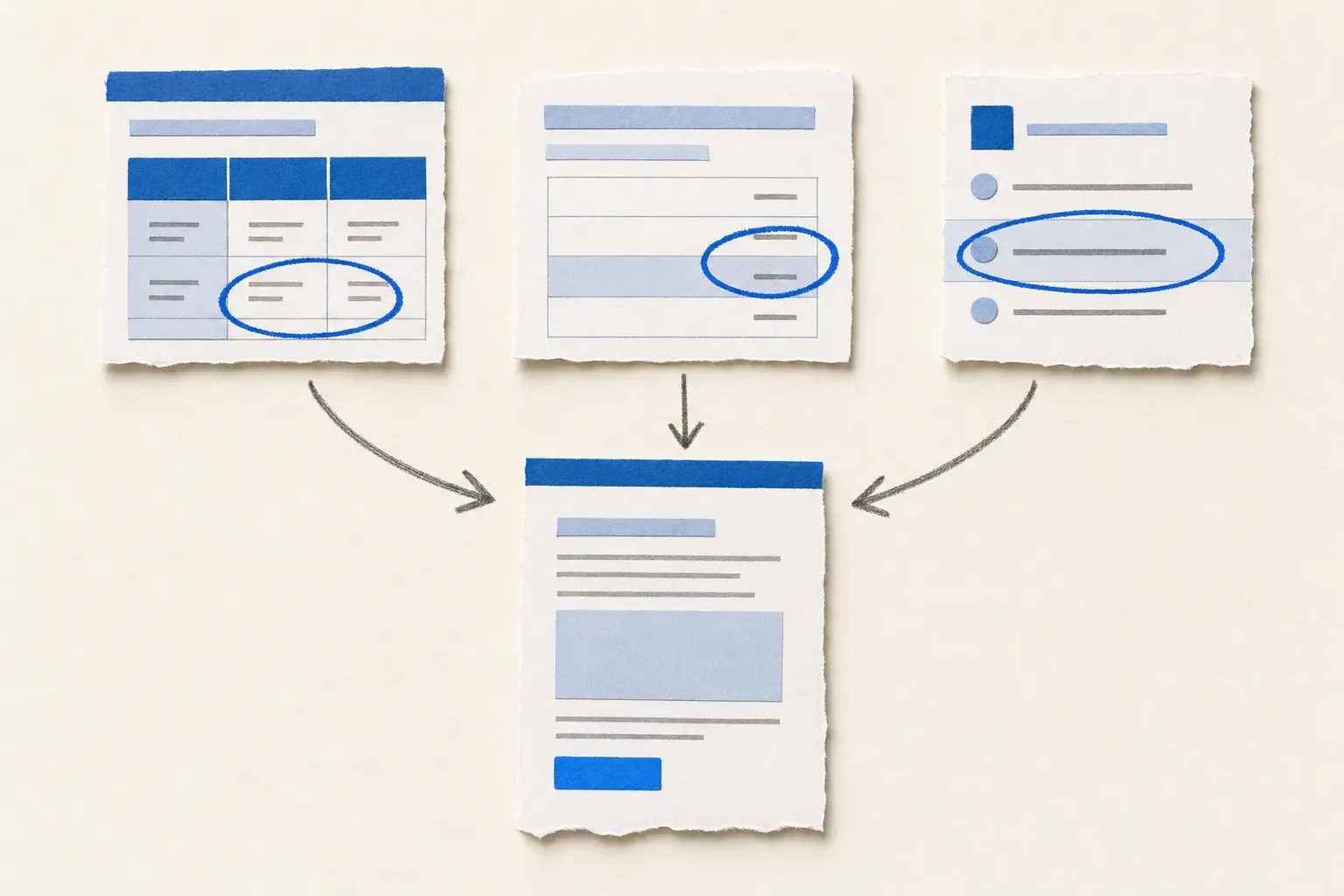
The observability test is the working core of competitive intelligence: if an advantage is real, it leaves evidence on public pages, and if it's eroding, those same pages move first. Pricing power gets tested on the pricing page. Switching costs get adjusted in migration offers. A focus player going broad announces it in its own navigation menu.
Advantage erosion shows up on public pages first. In a June 2026 sample of Visualping platform data, roughly 10,000 active monitors watch competitor pricing and plans pages across more than 1,300 accounts, and nearly 3,000 of them check daily or faster. Teams that do competitor tracking professionally treat rivals' pricing pages as daily-moving surfaces, because that's where an edge gets tested in public.
Grade each claim as you verify it: claimed (it appears in their marketing), observed (you can point at public evidence), or verified by behavior (the market confirms it through held premiums, renewals, or failed copycats). Only the third grade belongs in front of a sales rep without a caveat attached.
The practical loop: pick the pages where each rival's claimed advantage should be visible, put a competitive monitoring watch on each one, and log what changes. The findings have a natural home in a sales battlecard template, where each advantage claim carries a last-verified date a rep can trust.
For the full menu of watchable surfaces, our guide to competitive intelligence sources ranks 27 of them by signal value.
Want to know the day a rival's pricing power cracks? Put a monitor on their pricing page free, and the next structural change lands in your inbox with a plain-English summary. Setup takes about a minute.
Frequently asked questions
What are the 4 competitive advantages?
The four most-cited competitive advantages are cost leadership, differentiation, brand reputation, and switching costs. The last two are forms of differentiation, which is why strategists often compress the list to Porter's three generic strategies: cost leadership, differentiation, and focus. Any longer list you encounter subdivides those three.
What are the three main types of competitive advantage?
Cost leadership (deliver acceptable quality cheaper than rivals can), differentiation (offer something buyers pay a premium for), and focus (serve one niche better than generalists). The three come from Michael Porter's generic strategies and remain the standard frame because every durable advantage resolves into at least one of them.
What are the 7 competitive advantages?
Seven-item lists typically name cost, differentiation, brand, network effects, switching costs, proprietary technology, and distribution. All seven map onto Porter's three types: brand, network effects, switching costs, and proprietary technology are differentiation mechanisms, while distribution advantages usually resolve to cost or focus.
What is your biggest competitive advantage?
Answer it with the four tests: pick the edge that is durable (rivals can't neutralize it in a year), observable (public evidence exists), margin-relevant (it shows up in pricing, cost, or retention), and expensive to copy. If several qualify, lead with the one a competitor would have to sacrifice the most to imitate.
What is a competitive landscape?
A competitive landscape is the full set of rivals competing for your customers: direct competitors, indirect alternatives, and potential entrants, mapped with their positioning, pricing, and strengths. Teams keep it current by watching competitors' public pages, since positioning and pricing change without announcements.
Want to monitor web changes that impact your business?
Sign up with Visualping to get alerted of important updates from anywhere online.
Eric Do Couto
Eric Do Couto is the Head of Marketing at Visualping. He leads content strategy, growth operations, and brand positioning for website change detection.
More articles by Eric Do Couto