Amazon Price Tracker: Free Drop Alerts on Any ASIN
Updated September 8, 2026
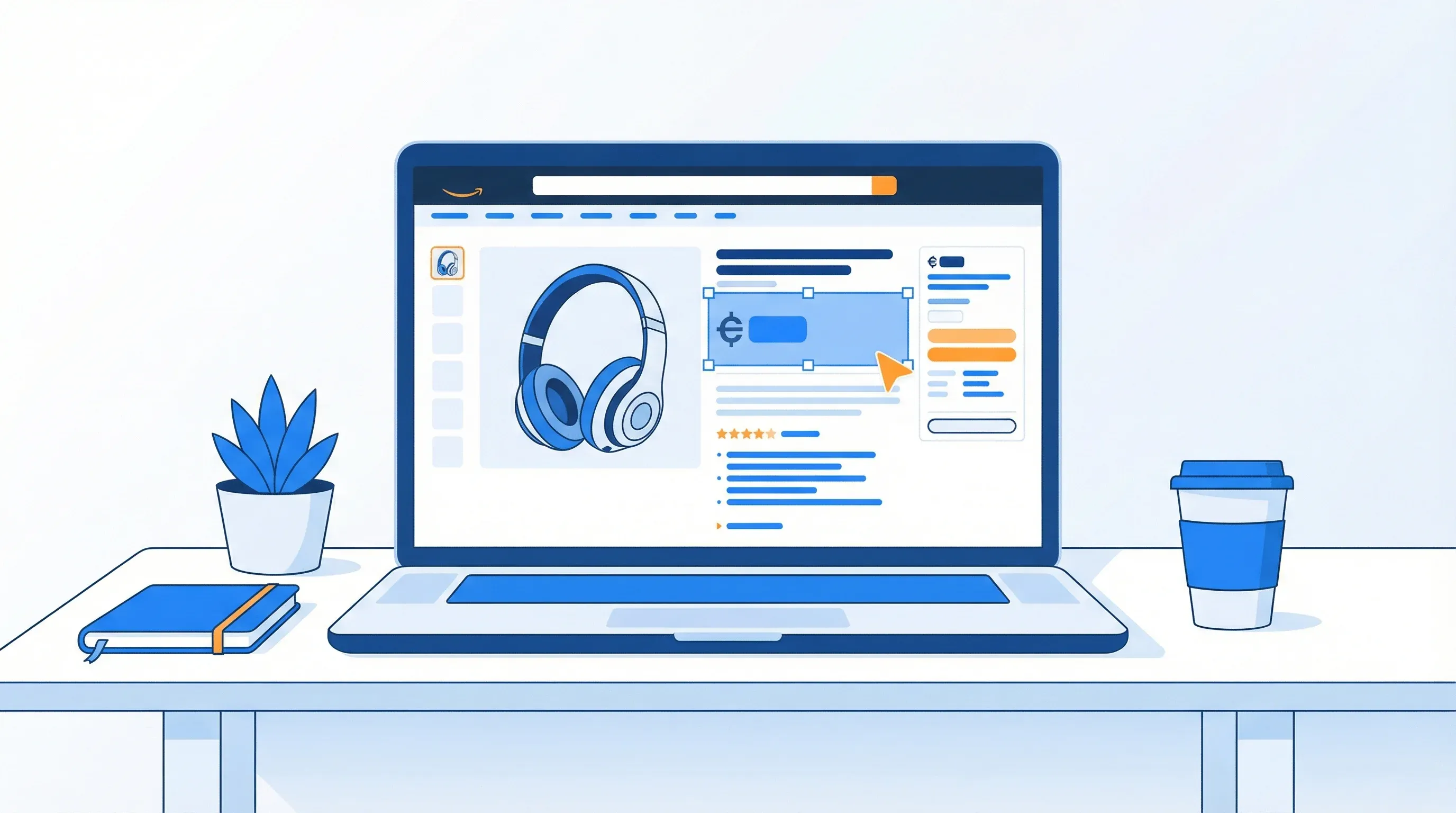
TL;DR: Paste any Amazon product URL into Visualping, select the price area, set a threshold rule (e.g., "alert me when price drops below $200"), and choose your check frequency. You will get an email alert the moment the price changes, with a screenshot showing exactly what changed.
Amazon changes product prices an average of every 10 minutes. Over 5,200 active Visualping monitors track amazon.com product pages right now, and more than half of those pages detected a price or content change in the last 30 days alone. Without a price tracker, you are either overpaying or spending hours manually refreshing product pages. Price tracking tools handle this for you: they watch the prices you care about and notify you when something drops to your target.
This guide compares the best amazon product price tracker options in 2026 so you can pick the right approach for how you shop.
How Amazon pricing works (and why tracking matters)
Amazon uses a dynamic pricing algorithm that adjusts prices based on competitor pricing, demand, inventory, time of day, and seasonal trends. A single product can change price dozens of times per day. That laptop you bookmarked at $899 last Tuesday? It might be $749 right now and back to $899 by tonight. Amazon reprices millions of products daily, far outpacing other major retailers.
This creates two problems:
- Fake discounts are common. Amazon and third-party sellers frequently inflate prices before major sales events like Prime Day and Black Friday, then advertise a "discount" that brings the price back to normal.
- Real deals disappear fast. Genuine price drops often last only hours before the algorithm corrects back up.
A price tracker solves both problems. It gives you a complete amazon price history for any product, so you can tell whether a "50% off" sale is real or manufactured. And it sends instant alerts when prices drop to your target, so you never miss a genuine deal.
Selecting the price area tells Visualping exactly what to watch
How to track Amazon prices: 5 amazon product price tracker methods
Method 1: Visualping (full-page price monitoring)
Visualping monitors any webpage for visual changes. That makes it useful for Amazon price tracking: it watches the actual rendered page, not structured data feeds that Amazon can restrict.
Setup takes about 60 seconds:
- Copy the Amazon product URL
- Paste it into Visualping
- Select the price area on the page (drag to highlight just the price section)
- Add a prompt for Visualping AI: "Alert me when price drops below $150"
- Set your check frequency: every 5 minutes during sales events, hourly or daily for regular monitoring
- Enter your email and start monitoring
What makes it different from browser extensions:
- Works in the background without keeping your browser open
- Monitors any element on the page (price, stock status, shipping time, seller info)
- Sends email alerts with a before/after screenshot so you can see exactly what changed
- Handles Amazon's anti-bot protections better than most extensions because it renders the full page
- Free tier available with paid plans for higher frequency checks
Prefer starting in your browser? You can track website changes in Chrome with the free extension first.
Visualping works on any retailer beyond Amazon. You can track prices on Walmart, Best Buy, eBay, and thousands of other sites with the same setup process. If you plan to request a refund, here’s the rule breakdown: Does Best Buy price match?
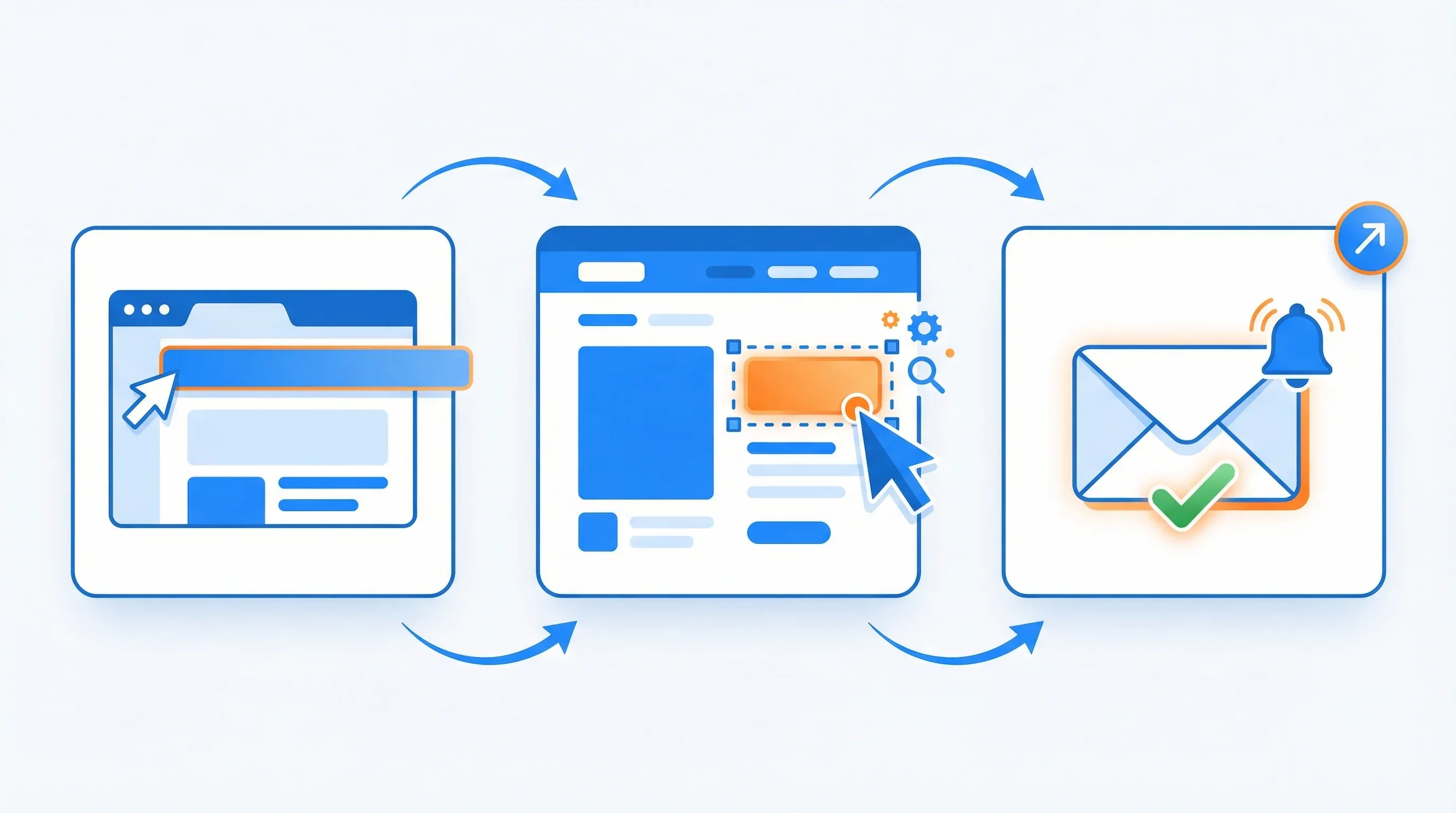 Setup takes about 60 seconds from URL to first alert
Related: Amazon in-stock alerts: how to get notified when products are back
Method 2: CamelCamelCamel (price history charts)
CamelCamelCamel is one of the oldest Amazon price trackers. It pulls pricing data from Amazon's Product Advertising API and displays historical price charts for millions of products.
How to use it:
- Search for a product on camelcamelcamel.com or paste an Amazon URL
- View the price history chart showing Amazon price, third-party new, and third-party used prices
- Set a desired price and get an email when the product hits that target
Strengths:
- Large historical database going back years
- Free to use
- Browser extension (The Camelizer) shows price charts directly on Amazon product pages
Limitations:
- Only tracks Amazon (no other retailers)
- Relies on Amazon's API, which Amazon has been restricting over time
- Cannot track non-price elements like stock availability or shipping changes
- Price history can have gaps when API access is interrupted
Method 3: Keepa (browser extension)
Keepa is probably the most well-known Amazon price tracker. It runs as a browser extension for Chrome, Firefox, and Edge, embedding price history charts directly into Amazon product pages as you browse.
How to use it:
- Install the Keepa extension from your browser's web store
- Browse Amazon normally. Keepa injects a price history graph on every product page.
- Click "Track this product" and set your desired price
- Receive alerts when the price drops
Strengths:
- Price charts appear inline while you shop on Amazon
- Tracks Amazon warehouses, marketplace sellers, and used prices separately
- International support for Amazon sites in multiple countries
Limitations:
- Requires your browser to be open (no background monitoring)
- Some advanced features require a paid subscription
- Only works on Amazon
- Can slow down page loading on Amazon
Method 4: Amazon's built-in Watchlist
Amazon itself offers basic price tracking for some products through its Watchlist feature and "notify me when available" options.
How to use it:
- Log into your Amazon account
- Add products to your Watchlist
- Amazon may notify you of price changes or deals
Strengths:
- No third-party tool required
- Integrated into your Amazon account
Limitations:
- Notifications are inconsistent and not guaranteed
- No threshold alerts (you cannot say "alert me below $X")
- Amazon controls what notifications you receive, which creates a conflict of interest
- No price history charts
- No cross-retailer comparison
Method 5: Google Shopping price tracking
If you already use Google Shopping to compare prices, it has a built-in price tracking feature worth knowing about.
How to use it:
- Search for a product on Google Shopping
- Click "Track price" on the product listing
- Google sends notifications through the Google app or email when the price drops
Strengths:
- Free and built into Google
- Can compare prices across multiple retailers
Limitations:
- Only works for products indexed in Google Shopping
- Limited notification controls
- No detailed price history charts
- Relies on Google's product data, which may not update as frequently as dedicated trackers
Amazon price tracker comparison (2026)
| Feature | Visualping | CamelCamelCamel | Keepa | Amazon Watchlist | Google Shopping |
|---|---|---|---|---|---|
| Price drop alerts | Yes | Yes | Yes | Limited | Yes |
| Custom threshold (alert below $X) | Yes (AI prompts) | Yes | Yes | No | No |
| Price history chart | Visual diff history | Yes | Yes | No | Limited |
| Works on other retailers | Yes (any website) | No | No | No | Yes |
| Background monitoring | Yes | Yes | No (needs browser) | Yes | Yes |
| Visual change screenshots | Yes | No | No | No | No |
| Stock/availability alerts | Yes | Limited | Limited | Limited | No |
| Free tier | Yes | Yes | Limited | Yes | Yes |
| Best for | Multi-retailer tracking, visual proof, stock + price | Deep price history research | Inline charts while browsing Amazon | Casual, no-tool-needed tracking | Cross-retailer price comparison |
What about Honey (PayPal Honey)? Honey automatically searches for coupon codes at checkout rather than tracking price changes over time. It will not alert you when a product drops to your target price or show you price history. If you already use Honey for coupons, pair it with a dedicated price tracker for complete coverage.
What about pricehistory.app? A newer entrant that tracks Amazon and Flipkart prices with clean historical charts. Good for simple price history lookups, but lacks threshold alerts, visual change screenshots, and multi-retailer support.
 Each method has trade-offs depending on how you shop
Which Amazon price tracker should you use?
If you want one answer: CamelCamelCamel for research, Visualping for alerts.
Here's the decision tree:
- "I want to check if this deal is real before buying." Use CamelCamelCamel or Keepa. Pull up the price history chart and compare the sale price against the 90-day average. Takes 30 seconds.
- "I want to get alerted when a specific product drops to my target price." Use Visualping with a threshold rule. Set it once and forget it. You'll get an email with a screenshot when the price hits your target.
- "I want to see price history while I browse Amazon." Use Keepa's browser extension. It embeds charts directly into Amazon product pages.
- "I want to track the same product across Amazon, Walmart, and Best Buy." Use Visualping. It works on any website, so you can monitor the same product across retailers from one dashboard.
- "I sell on Amazon and need to track competitor prices." Use Visualping for real-time competitor page monitoring with screenshot evidence. See the business section below.
How to check Amazon price history
Amazon does not show price history on its own product pages. To see how a product's price has changed over time, you need a third-party tool.
CamelCamelCamel is the fastest way to check Amazon price history. Paste any Amazon product URL into camelcamelcamel.com and you'll see a chart showing three price lines: Amazon's own price, third-party new, and third-party used. The chart goes back years on popular products, so you can see seasonal patterns (prices typically drop during Prime Day in July and Black Friday in November), identify the all-time low, and calculate the 90-day average to judge whether today's price is good.
Keepa offers similar charts with more granularity. The Keepa browser extension embeds the price history graph directly into Amazon product pages, so you don't need to visit a separate site. Keepa tracks more data points per day and covers more international Amazon sites than CamelCamelCamel.
Visualping shows price history differently. Instead of a structured chart, it captures timestamped screenshots every time the price changes, showing you exactly what the page looked like before and after each change. This is more useful for catching pricing games (like sellers inflating prices before a sale) because you see the full page context rather than a single data point.
What to look for in a price history chart:
- The 90-day average is your baseline for judging deals. Anything below this is genuinely cheaper than normal.
- The all-time low tells you the best price this product has ever reached. Set your alert threshold near this level for maximum savings.
- Seasonal patterns show predictable drops. Many electronics hit their lowest prices during Black Friday, while Amazon devices (Echo, Kindle, Fire) drop deepest during Prime Day.
- Price spikes before sales events are a red flag. If the "original price" only existed for a few weeks before the discount, the sale is manufactured.
How to spot fake Amazon discounts
Price tracking helps you find real deals and avoid manufactured ones. Here is what to look for:
The pre-sale inflation pattern. Sellers raise prices 2 to 4 weeks before Prime Day or Black Friday, then "discount" back to the normal price. The FTC has warned consumers about misleading discount claims, and several countries now require sellers to show the lowest price from the past 30 days alongside any "sale" price. A price tracker reveals this by showing the full price history. If the "original price" only existed for a few weeks before the sale, the discount is manufactured.
The fluctuating "list price." Amazon displays a "List Price" with a strikethrough and shows your "savings." But the list price is often set by the seller and may not reflect what the product normally sells for. Compare the current price against the 90-day average to see the real deal.
Third-party seller pricing games. On products sold by multiple sellers, prices can swing wildly as sellers undercut each other, then raise prices once competitors sell out. Tracking the "sold by Amazon" price separately from marketplace sellers gives a cleaner picture.
Tips for using price history data:
- Check the 90-day price average before buying anything during a sale event
- Set your target price below the 90-day average for a real deal
- Watch for products where the price drops to the same low point regularly (these follow predictable cycles)
- Compare the "Amazon" price versus "Third-party new" and "Third-party used" separately
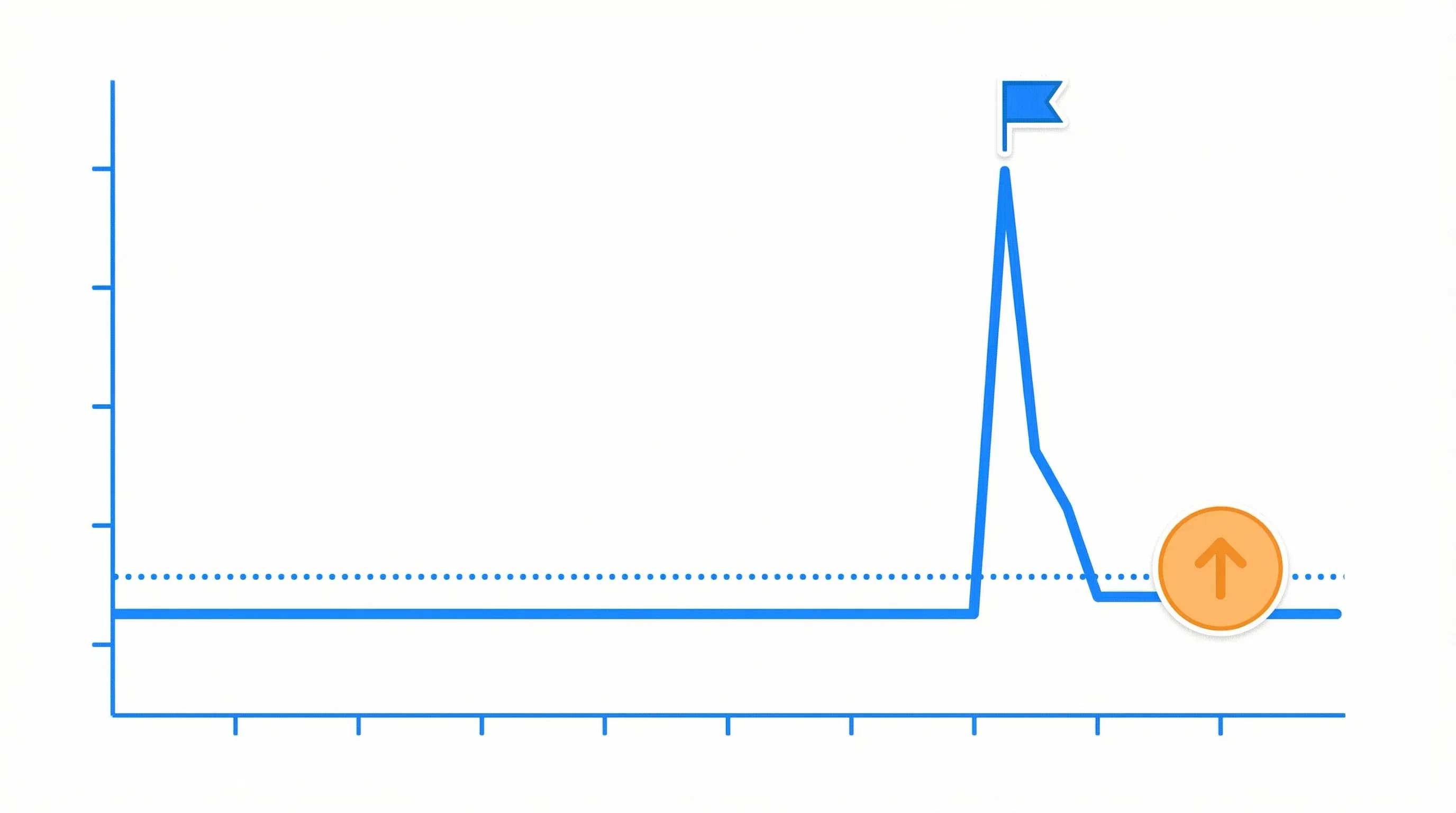 The price was steady all year until two weeks before Prime Day
Go deeper: Costco price tracking
Related: Best Buy Black Friday deal alerts
How to compare Amazon prices across sellers and retailers
Price tracking and price comparison are related but different. Tracking follows one product over time. Comparing means checking the same product across multiple sources right now. Here is how to compare Amazon prices effectively:
- Compare "Sold by Amazon" vs. marketplace sellers. The same listing often has multiple sellers at different prices. Click "Other Sellers on Amazon" to see all offers, including fulfillment method and shipping costs.
- Compare across retailers. The same product may be cheaper on Walmart, Best Buy, or eBay. Visualping can monitor the same product page on multiple sites so you can price compare Amazon against other stores automatically.
- Compare current price against historical averages. Use a price history chart (CamelCamelCamel or Keepa) to compare today's price against the 30, 60, and 90-day average. If the current price is above the 90-day average, it is not a deal regardless of what the "sale" label says.
- Compare variant prices. Different colors, sizes, and configurations of the same product often have different prices on Amazon. Check all variants before buying. Some drop sooner than others.
When to track: the late 2026 Amazon sales calendar
The last four months of the year are when price tracking pays off most, and when fake discounts peak. Here is the timeline (updated September 2026):
- Prime Big Deal Days (early October): Amazon's fall Prime event. Sellers begin inflating list prices in mid-September, so start monitors now to capture the real baseline before the "deals" appear.
- Black Friday (November 27) and Cyber Monday (November 30): The deepest discounts of the year on electronics. Deals launch progressively through November, not just on the day itself.
- December: Prices on popular gift categories often rise as inventory tightens. If a Black Friday deal returns in December, it is usually shallower.
The practical rule: set up your monitors 2 to 4 weeks before an event. That gives you the pre-event price baseline, which is the only reliable way to judge whether an advertised discount is real.
Best practices for Amazon price tracking
Set the right check frequency
Across Visualping's 5,200+ Amazon monitors, more than half detected a change in the last 30 days, and hundreds run hourly or faster checks. Match your frequency to how fast the price actually moves.
- During sales events (Prime Day, Black Friday): Check every 5 to 15 minutes. Prices change rapidly and deals sell out fast.
- For wishlist items you are not in a rush for: Check daily. You will catch any significant drops without using up monitoring credits.
- For competitive intelligence or business use: Check hourly. This captures most pricing algorithm changes without excessive monitoring costs.
Use threshold alerts over change alerts
Getting an alert every time a price changes by $0.50 creates noise. Set a specific threshold: "Alert me when this laptop drops below $800." This way you only hear about price changes that matter.
 Threshold alerts cut through the noise of small fluctuations
Monitor the right page element
Amazon product pages contain a lot of information. When setting up a visual monitor like Visualping, select just the price area rather than the entire page. This prevents alerts for irrelevant changes like new reviews, updated Q&A sections, or rotating ad banners.
Track multiple products in the same category
If you want a 65-inch 4K TV but do not care about the brand, track 3 to 5 options simultaneously. One of them will almost certainly drop to your target price faster than waiting for a specific model.
Track variants individually
Amazon products with multiple colors, sizes, or configurations each have their own price. Some variants drop first: the less popular color of a laptop or the 256GB model instead of the 512GB. Set up separate monitors for each variant you would be happy with, and you will catch deals faster.
Start monitoring 2 to 3 weeks before you need it
If you know you need a product by a certain date, start tracking well in advance. Price drops are unpredictable, but you increase your odds by giving the tracker more time to catch one. For seasonal purchases (back-to-school, holidays), start monitoring at least a month early.
Set realistic target prices
Before setting a price alert, check the product's price history to see its actual range over the last 90 days. Setting a target below the historical low means you will likely never get an alert. Set your target at or slightly below the 90-day low for the best balance of ambition and realism.
Combine price tracking with in-stock alerts
For high-demand products (gaming consoles, limited edition items, popular toys during the holidays), price tracking alone won't cover it. You also need to know when the product comes back in stock. Visualping can monitor both the price and availability on the same page.
Advanced: Amazon price tracking for businesses
Businesses use Amazon price monitoring too, and for higher stakes than saving $30 on headphones:
Competitive pricing intelligence
Sellers on Amazon track competitor prices to adjust their own pricing strategy in real time. If a competitor drops their price by 10%, you want to know immediately so you can decide whether to match, undercut, or hold your price. Tools like Visualping can monitor competitor product pages and alert you to any changes.
MAP (Minimum Advertised Price) compliance
Brands that sell through Amazon resellers need to monitor whether those resellers are complying with MAP pricing policies. Automated monitoring catches violations faster than manual spot checks, and the screenshot evidence Visualping provides can be used in enforcement conversations.
Buy Box monitoring
The Amazon Buy Box determines which seller gets the default "Add to Cart" placement. Buy Box winners change frequently based on price, seller metrics, and fulfillment method. Tracking Buy Box changes helps sellers understand when and why they lose the Buy Box.
Price intelligence across marketplaces
Businesses that sell on multiple platforms (Amazon, Walmart, eBay, their own website) need to ensure pricing consistency. Visualping can monitor product pages across all these sites simultaneously to flag discrepancies.
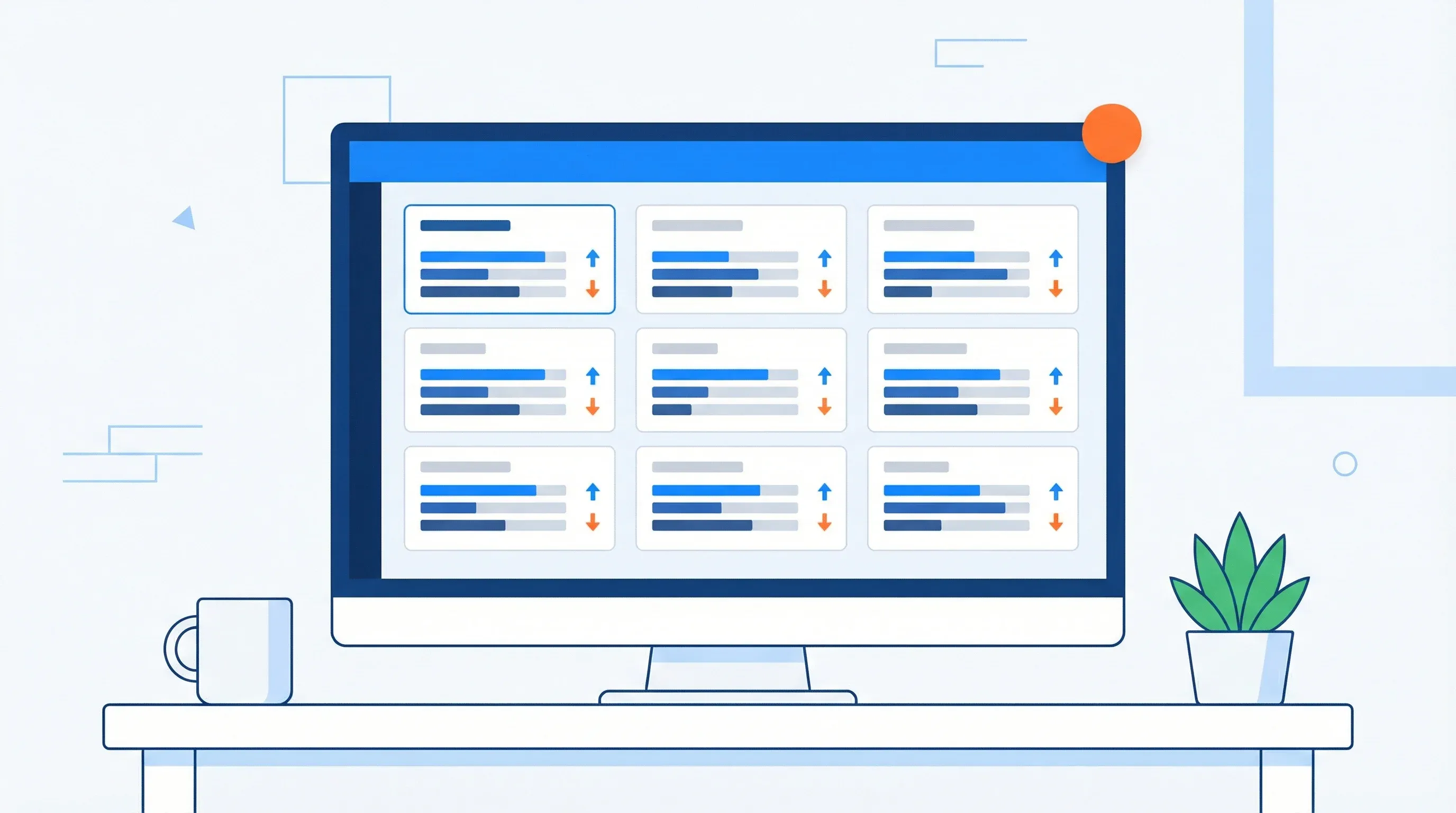 Price intelligence across marketplaces from a single view
Go deeper: Competitor price tracking tools
Frequently asked questions
Can you track an item's price on Amazon?
Yes. You can track any Amazon product's price using free tools like CamelCamelCamel, Keepa, or Visualping. Paste the product URL into any of these tools, set your desired price, and you will receive an alert when the price drops. Visualping works on any website beyond Amazon, which gives it more flexibility than Amazon-only tools.
Is there a way to set a price alert on Amazon?
Amazon's built-in Watchlist offers limited price notifications, but it does not let you set a specific target price. For custom threshold alerts ("notify me when this item drops below $150"), use a third-party tracker. CamelCamelCamel and Keepa both support price thresholds. Visualping supports natural language prompts like "alert me when price is under $150."
What is the best Amazon price tracker to use in 2026?
The best amazon product price tracker depends on what you need. CamelCamelCamel is best for detailed historical price charts. Keepa is best if you want inline price graphs while browsing Amazon. Visualping is best if you want to track prices across multiple retailers beyond Amazon, need visual change screenshots, or want to monitor stock availability alongside price. All three offer free tiers.
How do I know if an Amazon deal is real?
Check the product's price history using a tracker like CamelCamelCamel, Keepa, or Visualping. Compare the "sale" price against the 90-day average. If the price was inflated in the weeks before the sale and the "discount" only brings it back to its normal range, the deal is manufactured. The FTC recommends verifying discount claims against actual selling history, and several countries now require sellers to show the lowest price from the past 30 days next to any sale price.
How accurate are Amazon price trackers?
Dedicated trackers like CamelCamelCamel and Keepa pull data from Amazon's Product Advertising API and are generally accurate, though there can be brief delays. Visualping takes a different approach by monitoring the actual rendered page, which means it captures the exact price displayed to a real visitor. This can be more reliable when Amazon restricts API access or when prices differ based on location or account status.
Can I track prices on Amazon from other countries?
Yes. CamelCamelCamel supports Amazon US, UK, Germany, France, Spain, Italy, Canada, Japan, and Australia. Keepa covers even more international Amazon sites. Visualping works on any Amazon domain worldwide since it monitors the actual webpage rather than relying on a region-specific API.
How do I check Amazon price history for a product?
Paste the Amazon product URL into CamelCamelCamel or install the Keepa browser extension. Both show historical price charts going back months or years. CamelCamelCamel is free and requires no installation. Keepa embeds the chart directly into the Amazon product page. For a visual timeline of every change (including non-price changes like stock status), use Visualping's change history view.
Will Amazon do a price adjustment if the price drops after I buy?
Generally no. Amazon does not offer post-purchase price adjustments or price matching, even if the price drops the day after you order. The one exception is the Pre-order Price Guarantee: for pre-ordered items, you are charged the lowest price offered between your order date and the release date. For everything else, your options are to return the item and rebuy at the lower price (within the return window) or to track the price before buying so you purchase at the low in the first place. This is exactly why threshold alerts matter: catching the drop before checkout beats trying to recover the difference after.
How often does Amazon change prices?
Amazon reprices millions of products daily, with some items changing price dozens of times per day. Across Visualping's 5,200+ active Amazon monitors, more than half detected a change in the last 30 days. The frequency varies by category: electronics and trending products change most often, while books and household staples are more stable.
Want to monitor web changes that impact your business?
Sign up with Visualping to get alerted of important updates from anywhere online.
Eric Do Couto
Eric Do Couto is the Head of Marketing at Visualping. He leads content strategy, growth operations, and brand positioning for website change detection.
More articles by Eric Do Couto