
Disclosure: This article is published by Visualping. We offer website change monitoring services and may benefit if you choose our product. We have made every effort to provide accurate, balanced information to help you make an informed decision. We encourage you to conduct your own research and take advantage of free trials before making a purchasing decision.
Here's the thing about SEO in 2026: If you're not constantly monitoring what's happening with your website, and target search results, you're basically flying blind.
And it's not just about your own site anymore. You need eyes on your competitors too, because they're definitely watching you. This is where SEO monitoring comes in.
SEO monitoring is the systematic practice of tracking website changes and search ranking fluctuations to protect your organic visibility and inform strategic decisions.
Many marketers think SEO monitoring means occasionally checking Google Search Console or running a quick site audit. This approach often misses important changes and fails to provide the competitive intelligence needed for smart decision-making.
SEO monitoring plays competitive intelligence, though a lot of marketers still treat it like some optional nice-to-have.
Effective SEO monitoring involves systematically tracking both on-page elements and search rankings across your own properties and competitor sites to create a complete picture of your competitive landscape.
Key Takeaways
- SEO monitoring helps businesses protect rankings by detecting website changes - before they impact search visibility
- Effective SEO monitoring requires tracking both on-page elements and SERP positions rather than periodic manual checks
- Companies use SEO monitoring to understand competitor strategies and identify optimization opportunities
What is SEO Monitoring?
SEO monitoring represents the systematic tracking and analysis of changes to website elements that affect search engine rankings, as well as ongoing surveillance of search result positions.
Companies use this practice to protect their organic visibility and stay ahead of competitive threats.
The process involves three key components:
- Website change detection across pages that drive organic traffic
- Ranking surveillance for target keywords and branded searches
- Competitive analysis of competitor site modifications and SERP movements
This systematic approach helps organizations catch problematic changes before rankings drop. Companies track everything from robots.txt modifications to keyword removals in headers. They also monitor how these changes correlate with SERP position shifts.
SEO monitoring serves as an early warning system for ranking threats. It enables businesses to spot unauthorized changes, technical errors, and competitive moves before they become major problems.
Organizations can also discover optimization opportunities by tracking what works for competitors. The practice focuses on actionable insights rather than vanity metrics. Teams transform monitoring data into strategic decisions about content updates, technical fixes, and competitive responses.
Building Your SEO Monitoring Strategy
Creating an effective SEO monitoring plan starts with identifying your highest-value pages and most important ranking positions.
Companies must determine which site elements drive the most organic traffic and which competitors pose the greatest threats.
Key Questions to Ask:
- Which pages generate the most organic revenue?
- What are your most valuable target keywords?
- Which competitors rank above you for priority terms?
- What technical elements could break your rankings?
SEO teams, content marketers, and technical specialists typically collaborate on this monitoring effort. They track information from both their own properties and competitor sites using automated tools.
This includes monitoring website SEO elements, analyzing SERP changes, and tracking competitor content updates.
The main goal is to create an early detection system for ranking threats. Teams can then address problems before they impact traffic. This approach helps companies maintain search visibility and make smarter optimization decisions.
What to Monitor for SEO Success
Businesses need to track multiple types of changes across their digital properties and competitor sites to maintain strong organic performance.
Different elements require different monitoring approaches and frequencies.
Critical Website Elements
On-page SEO components form the foundation of organic visibility. Effective SEO monitoring tracks changes to elements that directly influence how search engines understand and rank pages:
- Title tags and meta descriptions - These determine SERP display and click-through rates
- Header tags (H1, H2, H3) - Structure content hierarchy and keyword emphasis
- Body copy and keywords - Core ranking signals for target queries
- Internal link structure - Distributes authority and helps crawlers navigate
- Robots.txt files - Controls which pages search engines can access
- Schema markup - Enhances SERP features and rich snippets
Monitoring these elements catches unauthorized changes before they damage rankings. A copywriter removing target keywords from headers, or a developer accidentally blocking important pages in robots.txt, can really take a hit on your SEO if left unresolved.
Ranking pages change these elements on a schedule. On September 22, 2026, a Visualping monitor on Bankrate's best high-yield savings accounts page caught the H1, the "Updated" date and the intro paragraph all changing in one pass. The new H1 carries the new top rate (4.20% APY), and the intro names the bank offering it. If you compete with a page like this, that refresh is your cue to check whether your own title, H1 and date still match what searchers see.

Off-Page SEO Assets
| Element to Track | Why it Matters |
|---|---|
| Backlink profile | External links can be removed when sites update content or go offline |
| Anchor text distribution | Helps ensure natural link patterns and avoid over-optimization |
| Domain authority scores | Provides context for competitive positioning in your niche |
| Brand mentions | Opportunities to request links from sites already discussing your brand |
Valuable backlinks you worked hard to secure from high-authority sites don't last forever.
Publications regularly update their content, reorganize pages, or remove outdated links entirely. Your product might be featured at the top of an industry article today and gone tomorrow, so it's important to stay on top of these external SEO factors.
This happens faster than most teams expect. On September 21, 2026, a Visualping monitor on NerdWallet's best credit card bonus offers page flagged that the list dropped from 20 results to 19, with the Chase Freedom Flex listing removed. The next day's check showed the card back on the page with a higher $250 bonus. If that were your product, a one-day absence from a high-traffic "best of" page is exactly the kind of change a monthly backlink report would never show you.
Search Ranking Positions (SERP)
SERP tracking reveals the actual impact of both your SEO efforts and competitor activities. Every SEO professional should monitor visibility for:
- Primary target keyword - Core business terms that drive conversions
- Branded searches - Queries including your company or product names
- Long-tail variations - Specific phrases with high intent
- Competitor comparison terms - "Brand A vs Brand B" type queries
Search results change constantly. New competitors emerge, current rivals update their content, and Google releases algorithm updates that reshape rankings entirely.
Knowing when you're climbing or dropping helps you respond strategically before traffic losses become severe.
Read more about the importance of tracking your brand's search ranking, and how ranking data is often misleading in one our latest blog posts.
Competitor Intelligence
Tracking rival websites provides strategic advantages beyond protecting your own rankings. Monitor competitor pages for:
- Content updates and new pages - See when they publish new blog posts, add product pages, or expand into new topic areas.
- Keyword targeting shifts - Notice when they add or remove specific keywords from title tags and H1s. Identify which search terms they're prioritizing in their headers and meta descriptions
- Pricing and packaging changes - Monitor adjustments to service tiers, feature bundling, discount strategies, and competitive positioning against your own offerings
- Social proof updates - Watch for new customer testimonials, case study additions, client logo displays, or trust badge implementations
- Resource page expansions - Track when competitors add new tools, calculators, templates, or downloadable resources that attract backlinks
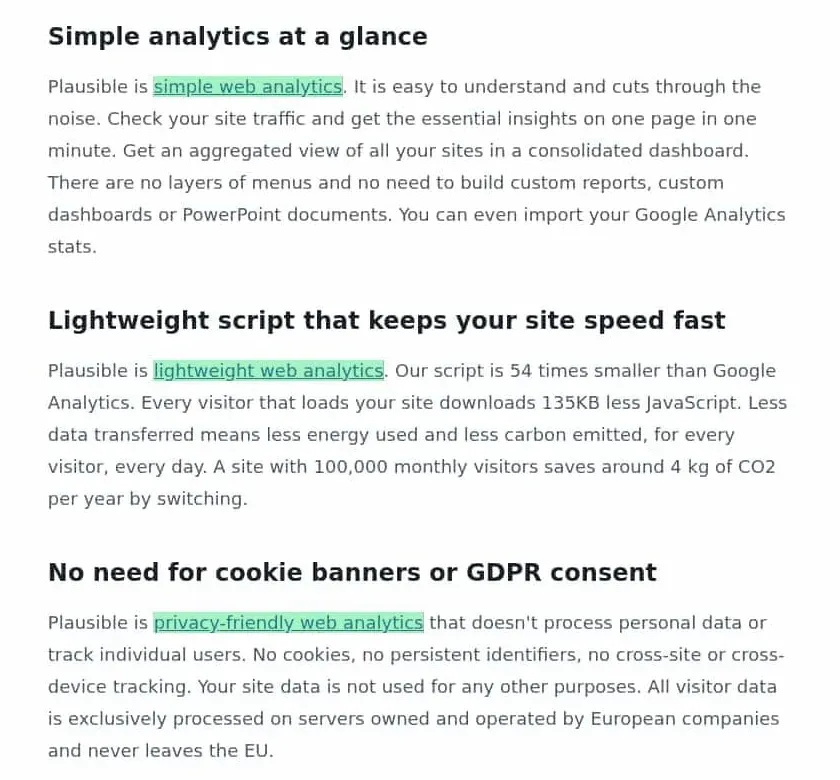
Here's what a keyword targeting shift looks like when it's caught. On September 5, 2026, Visualping flagged a copy change on Plausible's homepage: three instances of "analytics" became "web analytics," turning the section intros into "simple web analytics," "lightweight web analytics," and "privacy-friendly web analytics." That's a competitor tightening its homepage around a more specific search term, and it shows up as three highlighted phrases instead of a line in a rank report two weeks later.
Ann Smarty, founder of SEO and GEO boutique marketing agency Smart.Marketing, uses Visualping to monitor "brand-driven SERPS."
She compares the volatility of these search results to "having a business card while being unable to control what it says."
Because Google's algorithms can rearrange your brand's search results page at any moment, tracking these SERPs is critical for spotting reputation risks, like negative reviews, inaccurate knowledge panels, or competitor ads, before they become the defining feature of your brand's online identity.
Top SEO Monitoring Tools to Consider
Your exact tech stack for SEO monitorin really depends on what you need to track. Here are three strong options to consider, each serving distinct purposes.
Semrush: Comprehensive Rank Tracking
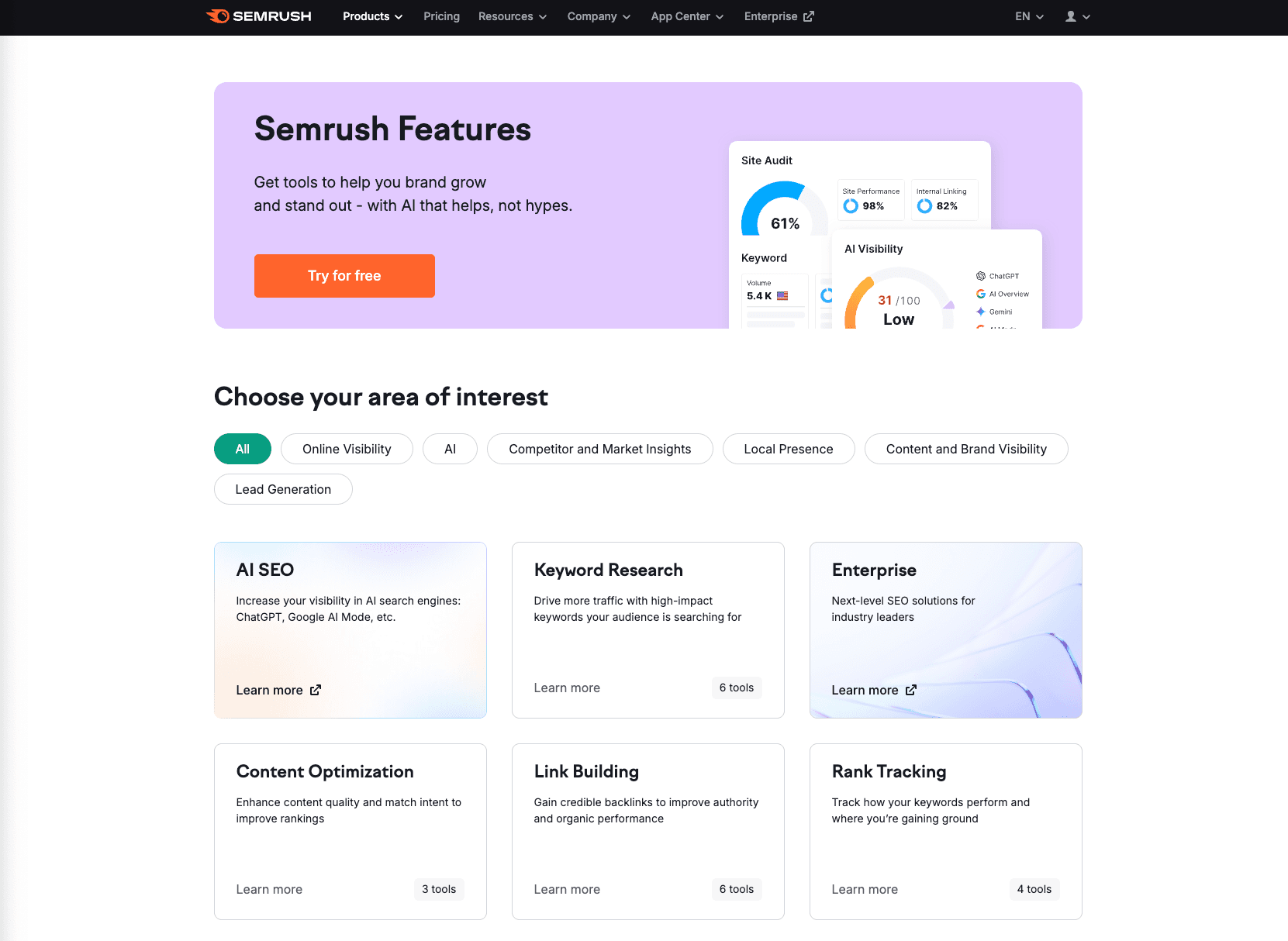
Semrush is one of the most comprehensive SEO platforms available, offering daily ranking updates as part of a broader SEO toolkit. Its Position Tracking tool monitors keyword rankings across multiple locations and devices.
Key Features for SEO Monitoring:
- Track 500-5,000 keywords depending on plan tier
- Daily automated ranking updates
- SERP feature tracking (featured snippets, local packs)
- Competitor position comparison
- Algorithm volatility monitoring via Sensor tool
Pricing: Plans start at $139.95/month for 500 keywords with annual discounts available. (As of January 2026)
Best for: Teams needing rank tracking combined with keyword research, site audits, and competitor analysis in a single platform.
Ahrefs: Backlink-Focused SEO Monitoring
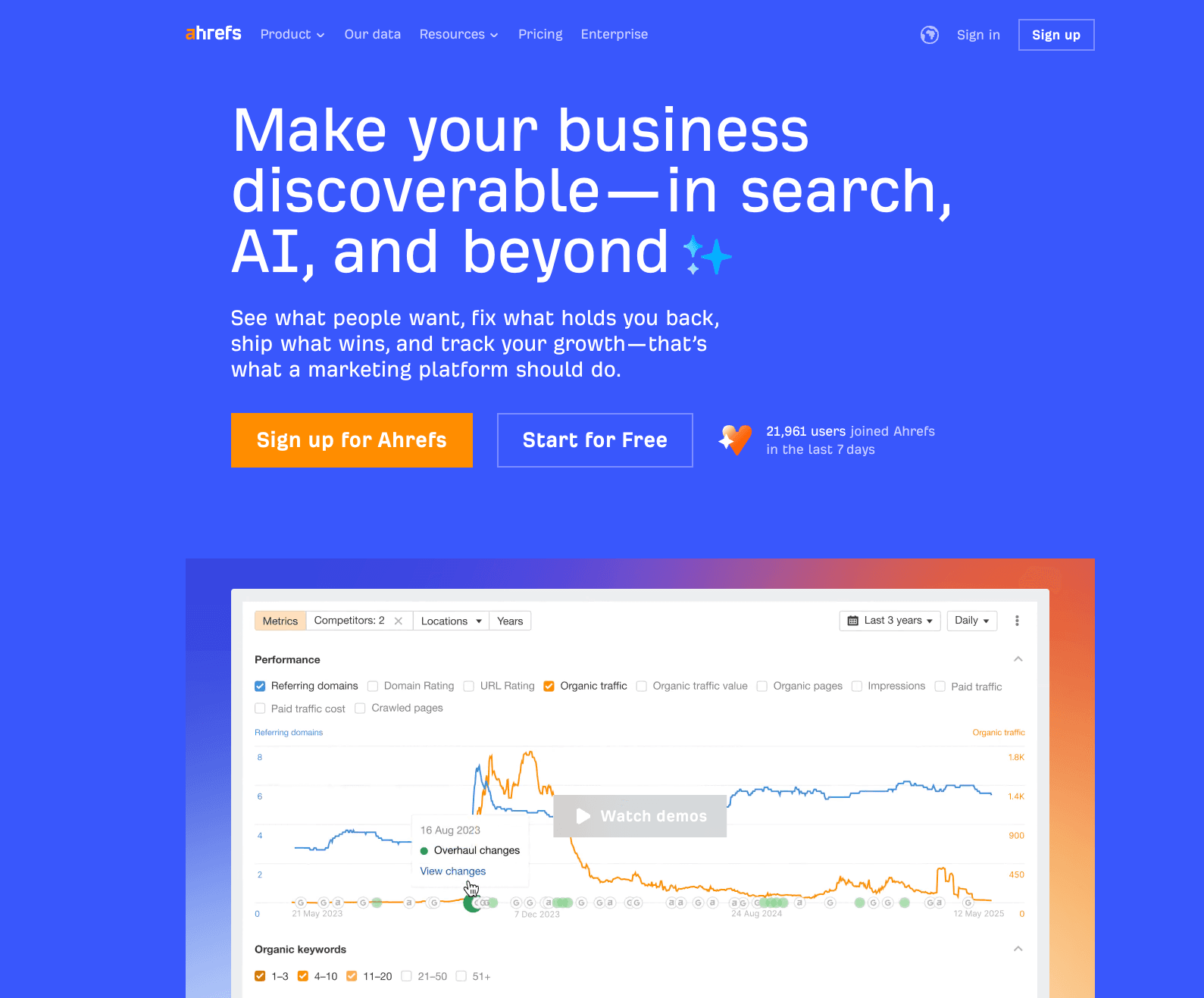
Ahrefs excels at backlink monitoring with the industry's largest live backlink index. While it includes rank tracking, its primary strength is monitoring your backlink profile and competitor link-building activities.
Key Features for SEO Monitoring:
- Track 750-10,000+ keywords depending on plan
- Industry-leading backlink monitoring (35+ trillion links)
- Weekly rank updates (daily updates available as add-on)
- Site audit tool for technical SEO issues
- Competitor backlink analysis
Pricing: Plans start at $129/month for 750 tracked keywords with significant discounts on annual billing. (As of January 2026)
Best for: SEO professionals who prioritize backlink monitoring and need accurate data on link removals, new backlinks, and competitor link-building strategies.
Visualping: AI-powered Visual Change Detection for SERPs and Websites
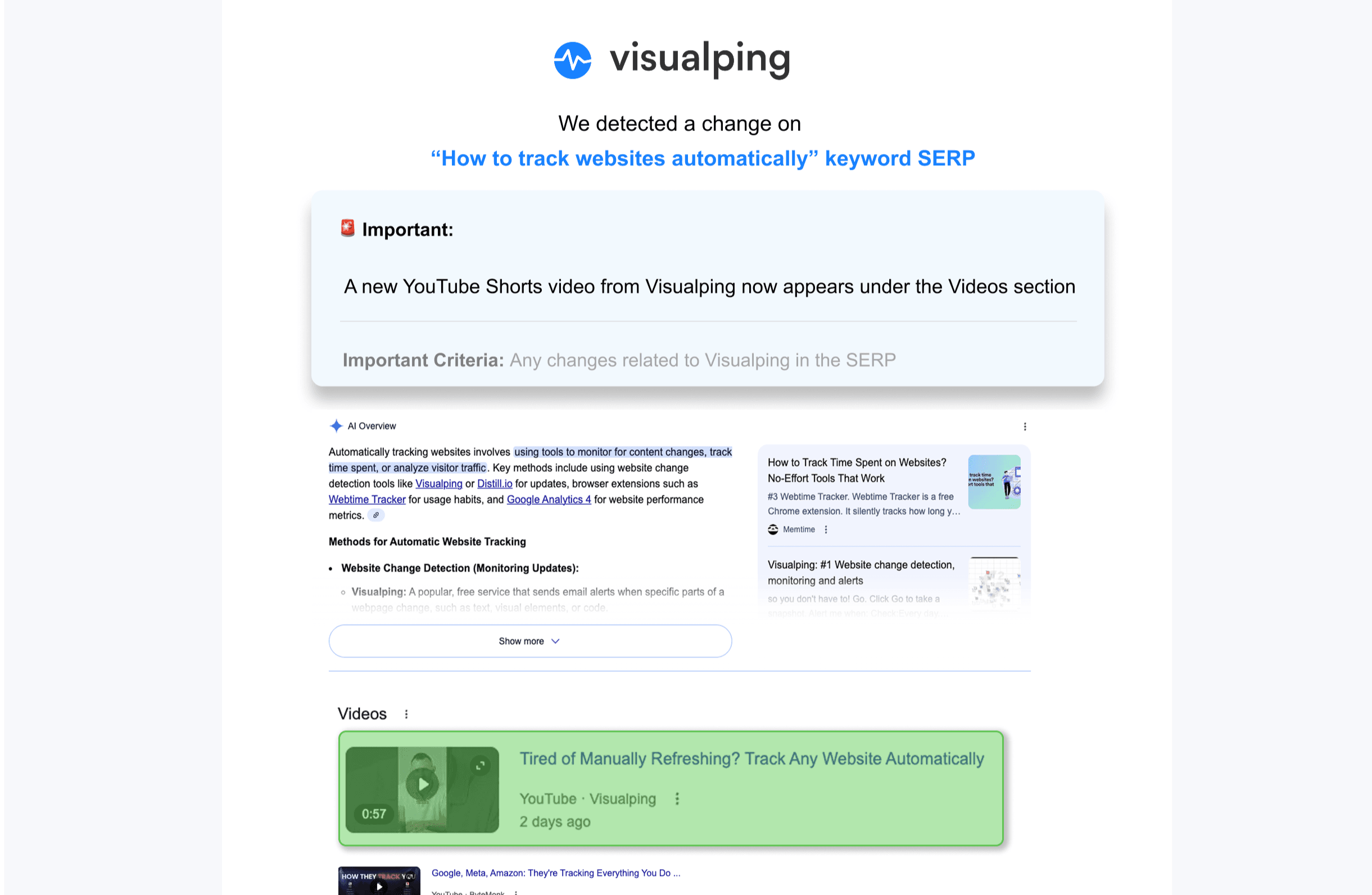
For a different approach to SEO monitoring, Visualping tracks visual changes to any webpage—including search results, your own pages, and competitor sites.
Rather than just tracking position numbers, it shows you exactly what changed on the page.
Key Features:
- Monitor any URL including Google search result pages
- AI-powered change analysis that summarizes what changed
- Visual highlighting of changes in screenshots
- Customizable monitoring frequency (from daily to every 2 minutes)
- Alerts via email, SMS, Slack, Microsoft Teams, or API
- Select specific areas of the page to track
What Visualping Shows You:
- When competitors appear or disappear from SERPs
- Featured snippet changes
- New ads appearing for your keywords
- SERP layout and feature changes (AI Overviews, videos, etc)
- Visual changes to search results pages
Choosing the Right Tool:
- Use Semrush or Ahrefs if you need comprehensive rank tracking data with historical trends and keyword - performance metrics
- Use Ahrefs specifically if backlink monitoring is critical to your SEO strategy
- Use Visualping when you need to see exactly what changed on pages, monitor competitor website updates, or track visual SERP changes
- Use multiple tools together for complete coverage—rank tracking for the numbers, visual monitoring for the context
Read our complete comparison of the best SERP monitoring tools for a deeper analysis of SEO monitoring tools.
Why Manual SEO Monitoring Fails
Marketing teams face impossible challenges when attempting to monitor SEO changes manually across multiple properties and competitor sites.
The Volume Problem
If you're an in-house SEO specialist, different teams constantly modify your site without consulting you first. Copywriters update content, UX designers restructure pages, developers push code changes, and product teams add new features. Each change can negatively impact rankings.
The only way to catch these changes manually is checking your site constantl, and flicking through each page to make sure everything looks right and is properly optimized. That's hours spent on tedious verification work. And you'll still miss things, because you're human and can't review every page element every day.
Agency SEOs face even worse challenges. Managing multiple clients means juggling dozens of websites simultaneously. That's potentially hundreds of pages requiring regular checks. With so many pages to monitor, clients often discover ranking problems before you do. Not a good look.
The Competitive Blindness Issue
Tracking competitor SEO changes manually means you're always playing catch-up. You might notice a competitor's page suddenly outranking yours for a valuable keyword, but investigating why requires manually comparing their current page to old versions you probably didn't save.
Without systematic tracking, you're left guessing what keywords they added, how they restructured their content, what new backlinks they acquired, and when exactly the changes happened. By the time you reverse-engineer their strategy, you're weeks or months behind in implementing similar optimizations
The SERP Volatility Challenge
Search results change constantly. New competitors appear for your target keywords. Existing rivals climb above you. Google releases algorithm updates that completely reshuffle rankings.
Manually checking rankings means periodic snapshots that miss the full picture. You might check rankings weekly and miss daily fluctuations. You can't correlate SERP changes with specific website modifications. You won't notice gradual declines until significant damage occurs.
Marketing managers already juggle countless responsibilities. Adding manual SEO monitoring creates an impossible workload that guarantees missed changes and delayed responses.
That's exactly why automated SEO monitoring tools have become essential infrastructure for serious SEO programs.
Getting Started with SEO Monitoring
SEO monitoring doesn't have to be complicated. Start with these practical steps:
-
Identify Your Critical Pages Focus on the 10-20 pages that drive the most organic traffic and revenue. These are your priority monitoring targets.
-
Choose Your Tools Select tools that match your needs:
- Rank tracking tools (Semrush, Ahrefs) for keyword position data
- Visual monitoring tools (Visualping) for catching visual changes on SERPs and websites
- Consider using both types together for comprehensive coverage
- Set Up Monitoring For visual monitoring with tools like Visualping:
- Add URLs into Visualping of your top 10-20 pages
- Set up AI prompts to only flag important changes (keyword removals, title tag changes)
- Set appropriate check frequencies (daily for most pages, hourly for critical ones)
- (Optional) Add competitor pages to track their content, homepage, etc
- Establish Response Protocols
Data and information is useless without a plan of action. Instead of trying to fix everything at once, establish a triage system that categorizes SEO changes by severity and assigns clear ownership.
-
Critical Alerts (Drop everything): Issues that completely block revenue or traffic, such as site outages, robots.txt blocks, or broken checkout pages. These should route immediately to developers or technical SEO leads.
-
High Priority (Address quickly): Strategic changes like lost H1s, missing meta descriptions, or significant competitor ranking shifts. These typically go to the content or SEO manager.
-
Low Priority (Review periodically): Minor copy tweaks or small fluctuations in long-tail keyword rankings. These can be batched for weekly or monthly reviews.
Frequently Asked Questions About SEO Monitoring
What are the most important SEO metrics to monitor?
To get a complete picture of your SEO health, we recommend prioritizing monitoring these five core metrics:
-
Keyword Rankings: Your position for high-intent, revenue-driving terms.
-
Organic Traffic: The volume of visitors coming from search engines.
-
Backlink Health: The quantity and quality of sites linking to you.
-
Page Speed & Core Web Vitals: User experience metrics that impact rankings.
-
Crawl Errors: Technical issues preventing Google from indexing your site.
How often should I monitor my SEO rankings?
Frequency depends on your industry's volatility and your business size.
Daily: For enterprise sites, news publishers, or highly competitive industries (like finance or e-commerce) where fluctuations happen rapidly.
Weekly: For most B2B companies and small-to-mid-sized businesses. This filters out daily noise while keeping you informed of trends.
Real-Time: For critical technical infrastructure (uptime, robots.txt) to prevent critical issues like de-indexing.
Why did my SEO rankings drop suddenly?
Sudden ranking drops usually stem from one of three causes:
Technical Errors: A recent code deployment may have accidentally blocked crawlers or broken internal links. Algorithm Updates: Google may have released a core update that shifted how it values content. Competitor Movement: A rival may have published superior content or acquired significant backlinks, pushing you down the SERP.
SEO monitoring tools help you diagnose which of these is the culprit by correlating the drop with specific timeline events.
Is SEO monitoring necessary for small businesses?
Yes. While small businesses may not need enterprise-grade data density, they are often more vulnerable to technical mishaps because they lack dedicated SEO teams.
A single broken plugin or accidental change to a homepage title tag can affect a small business's SEO a lot. Automated monitoring acts as an affordable insurance policy for your digital storefront.
Does SEO monitoring help with Generative Engine Optimization (GEO)?
Yes, primarily by protecting your "Source of Truth." GEO relies on Large Language Models (LLMs) finding consistent, structured facts about your brand.
SEO monitoring ensures that the critical entity data on your site, like schema markup, pricing tables, and "About Us" content, remains live, consistent, and error-free.
Additionally, visual monitoring tools can track Google AI Overviews directly on the SERP to see if your brand is appearing in those specific generative summaries.
Related Resources
- The 7 Best SERP Monitoring Tools for 2026 - Compare the top-rated tools on the market to find the right fit for your rank tracking and visual monitoring stack
- Why Rank Position Data Lies (And How to See What Users Actually See) - An explainer on why traditional rank trackers often miss the full picture of your search performance, and how visual SERP monitoring fills the gap.
- How to Monitor My Brand in ChatGPT - A step-by-step guide to tracking your brand’s presence in ChatGPT responses
- How to Monitor Backlinks for Better SEO - Learn how to set up automated alerts for your most valuable backlinks to track link health and prevent authority loss.
- Best AI Tools for Competitor Analysis - A comprehensive comparison of AI-powered tools for competitive intelligence
Want to monitor web changes that impact your business?
Sign up with Visualping to get alerted of important updates, from anywhere online.
Eric Do Couto
Eric Do Couto is the Head of Marketing at Visualping. He leads content strategy, growth operations, and brand positioning for website change detection.
More articles by Eric Do Couto